
Cavalaria do Templo em festa na boa terra de Alcochete

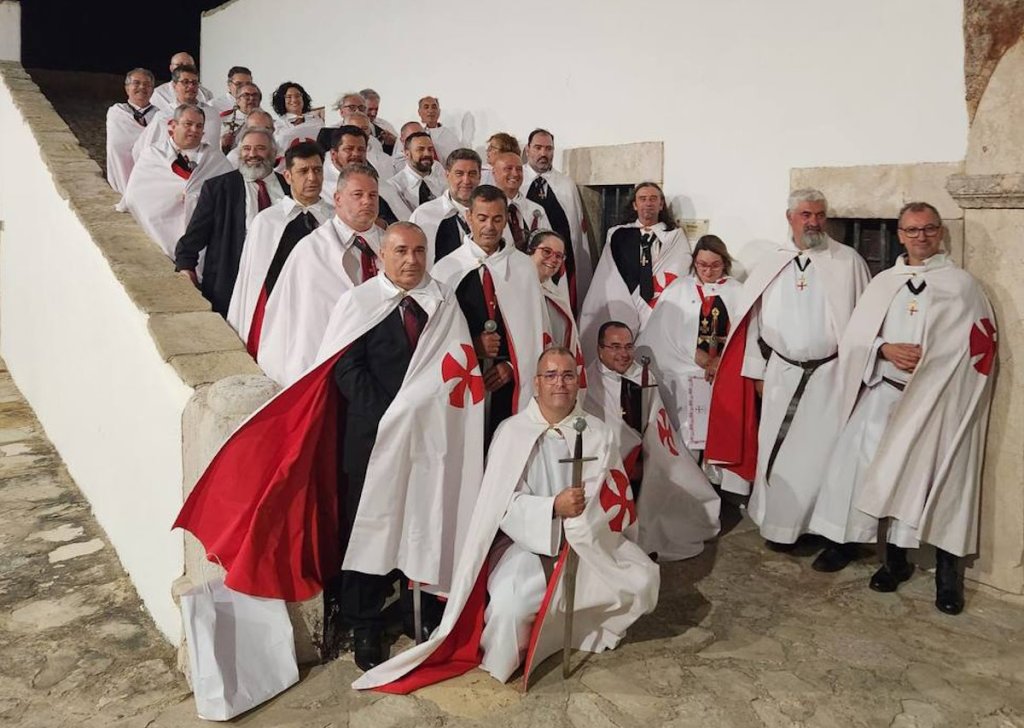
Em comemoração dos seus 30 anos de actividade, o Grão Priorado de Portugal da OSMTHU mandou que se montasse Capítulo do seu Ramo Secular em Alcochete no dia 20 de Abril, para proceder à distinção e reconhecimento do trabalho altruísta e empreendedor de várias figuras daquele foro, bem como para proceder à armação de quatro novos membros da Ordem.
A reunião teve lugar na antiga Igreja da Misericórdia, junto ao rio Tejo, edifício histórico datado do século XVI, erguido sobre a capela associada ao antigo Paço Real, residência dos Duques de Beja, casa eleita pela corte para momentos de lazer desde o reinado de Dom João I e onde terá nascido o próprio Rei Dom Manuel I. Ali está situado actualmente o Núcleo de Arte Sacra do Museu Municipal de Alcochete.
O dia iniciou-se pela manhã, com a Velada de Armas e Instrução da Cavalaria, ocasião em que foram feitas as habituais advertências aos postulantes, recordando-lhes a vida sob a Regra Latina na época medieval e explicados os preceitos da Cavalaria do Templo. Pela tarde o Capítulo foi aberta na sua forma tradicional, dando entrada aos inúmeros convidados e público que se dispôs a assistir, a todos os que seriam agraciados, aos membros da Ordem e por últimos aos Oficiais, que incluíam os Comendadores, de Sintra, F+ Paulo Valente, KCTJ, Laccobriga KCTJ, F+ Victor Varela Martins KCTJ, Lisboa Colina das Chagas, Fr+ Fernando Silva KCTJ e Lisboa Colina de Santa Catarina, S+ Susana Ferreira DCTJ, o Grande Senescal Fr+ Paulo Fernandes KGOTJ e o Grande Preceptor, Fr+ José C. Mateus KGOTJ, bem como a Preceptora do Porto – São João, S+ Paula Mateus, DTJ. Estiveram ainda presentes o Grão Prior de Espanha da OSMTH, Fr+ Fancisco Miguel Caballero e o Grão Mestre da Ordem de São Miguel da Ala, Dom Nuno Maria de Bragança e Bourbon Cabral da Camara Pereira. O Capítulo estava lotado, agradecendo-se aos voluntários que acederam a acompanhar os trabalhos em pé.

Foi explicado aos postulantes que uma das funções da Cavalaria – e por maior razão da Cavalaria Templária – é “dar voz aos que não são ouvidos, destacar os que são escondidos, dar força aos que não têm amparo e esperança aos que desesperam”, nobre tarefa que implica levar uma luz, um verdadeiro foco de atenção para situações que, de outro modo, passam ignoradas. “Num mundo em que tantos acrescentam um zero à esquerda, é nossa missão acrescentar zeros à direita. Por esse simples gesto queremos multiplicar por dez, por cem, por mil, o efeito da solidariedade humana e o esforço do trabalho individual pela congregação, num foco único e transformador da atenção não dividida. Numa feliz expressão, ter o talento de bem fazer, o de trazer a um lugar os de boa vontade para realizar a obra de vontade dos bons.”
Foram então apresentados os agraciados com a Ordem de Dona Leonor, ao Mérito Social, Humanitário e Caritativo. A Ordem toma a sua inspiração da figura histórica da Rainha D. Leonor e visa reconhecer e premiar o mérito, a excelência e os serviços prestados por aqueles que se destacam nas suas respectivas esferas de actuação, com especial relevo para o exercício das Obras de Misericórdia e Humanitárias, confins aos objectivos da OSMTHU.

Foram agraciados com a Cruz e o Grau de Oficial, Fernando Manuel Gonçalves de Pina Pinto, Presidente da Câmara de Alcochete; Paulo Jorge Lima Vieira, Comandante dos Bombeiros Voluntários de Alcochete, Luis Manuel Garrett Pinto, empresário e reconhecido empreendedor e Dom Nuno da Camara Pereira, Grão Mestre da Ordem de São Miguel da Ala. O Cavaleiro I+ Nuno Moreira fez uma apresentação dos agraciados de Alcochete, sublinhando a obra e a dedicação ao serviço da população de cada um deles, amplamente justificando a distinção honorífica atribuída. Coube ao Grão Prior, F+ Luis de Matos, KGCTJ a apresentação do agraciado Dom Nuno da Camara Pereira, sublinhando não apenas o seu papel como tenaz Grão Mestre da mais antiga Ordem Dinástica de Cavalaria Portuguesa, como a protecção e serviço social há muitas décadas na ASA – Associação de Socorro e Amparo, que gere um colégio com 160 crianças carenciadas no bairro de Carnide, em Lisboa.

De seguida passou-se ao acto de Armação dos postulantes. O Grão Prior deu uma explicação acerca das diferenças entre Armar, Investir e Ordenar, designações nem sempre usadas de forma rigorosa. Foram recebidos na Ordem e Armadas as Irmãs e novas Damas do Templo Seculares, Ana Telhada, Carla Mendes e Ilda Moutinho, bem como o Cavaleiro Secular Michael Reynolds.
Os trabalhos foram então encerrados, dando a oportunidade aos presentes de tomarem a palavra. Os agraciados partilharam algumas reflexões pessoais muito tocantes, evidenciando uma harmonia perfeita entre a sua forma de estar na vida e o ideal milenar da Cavalaria. Alguns Irmãos e Irmãs da Ordem deram os parabéns aos novos membros e sublinharam o sentimento de protecção e harmonia que se viveu aquela tarde. Lá fora a chuva caia forte e a trovoada rolava sobre o Tejo ameaçadora. Mas na Igreja da Misericórdia, os corações exaltavam e as palavras fluíam livres e festivas.
Na hora do encerramento, de forma espontânea, Dom Nuno da Camara Pereira cantou o Pai Nosso, a capella, antecedendo o Non Nobis cantado em conjunto por Cavaleiros, Damas, convidados e membros do público, encerrando em júbilo uma tarde memorável na boa terra de Alcochete.

A Ordem deseja agradecer a Alcochete a sua belíssima hospitalidade, bem como a todos os Irmão e Irmãs que contribuíram para a realização da cerimónia, designadamente o Cavaleiro I+ Nuno Moreira e família, assim como todos os que viajaram centenas de quilómetros para festejar os frutos do bom trabalho e partilhar do banquete que só a fraternidade pode servir. Partimos cheios. Voltaremos.
O dia 20 de Abril de 2024 ficará gravado na história dos movimentos de inspiração Templária em Portugal. Além de Alcochete, com os 30 anos do Grão Priorado de Portugal da OSMTHU, neste mesmo dia reuniram e receberam novos reforços à Cavalaria, dois outros ramos, dos mais activos em Portugal. A OSMTH em Beja e a OPCTJ em Monsaraz. Hoje o Facebook vestia de branco. A eles, como Irmãos, uma forte saudação. Vemo-nos em Jerusalém, se é esse o vosso caminho.

Próximas actividades
Maio 4; Feira Medieval de São Pedro da Cadeira; Entrada livre; Apresentação pública
Maio 18 – 19; Pentecostes; Exclusivo a membros
Julho 6; Armações Seculares; Castelo de Castro Marim
Contacto: secretariado@seculartempli.org
Semana Santa de Palma del Rio 2024
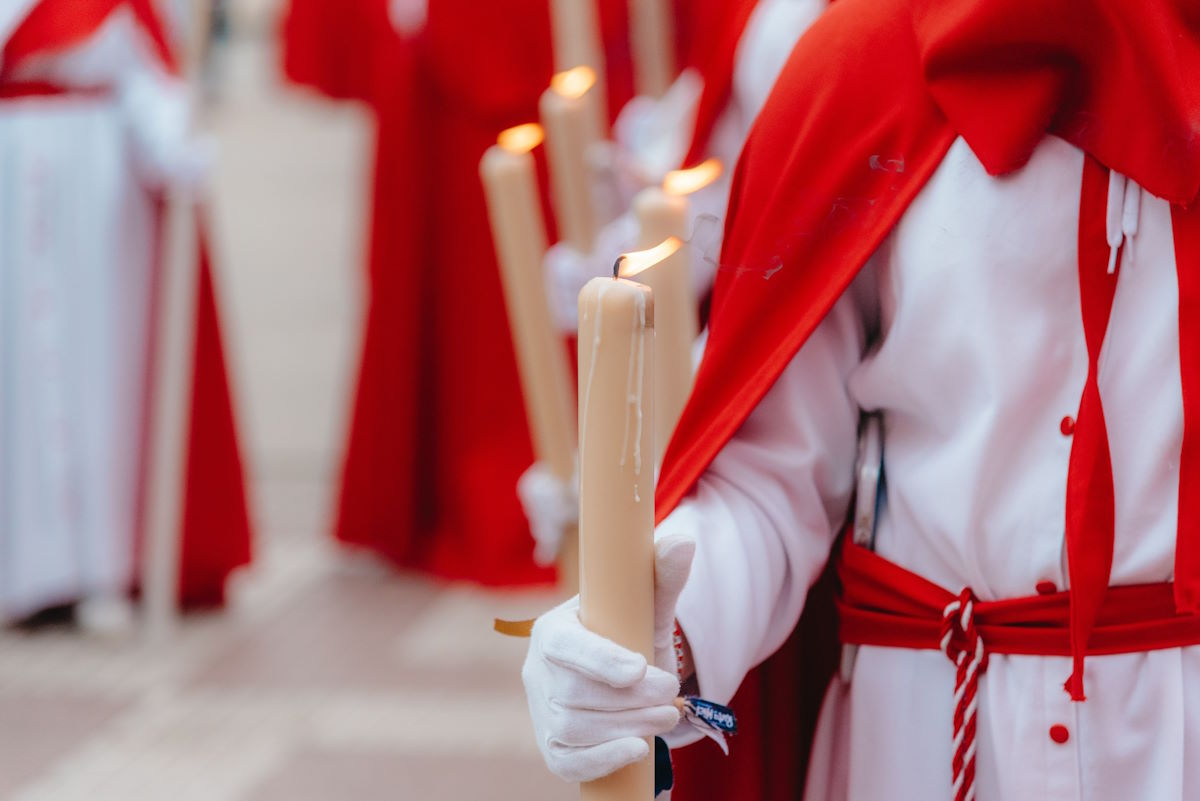
[Em Português mais abaixo]
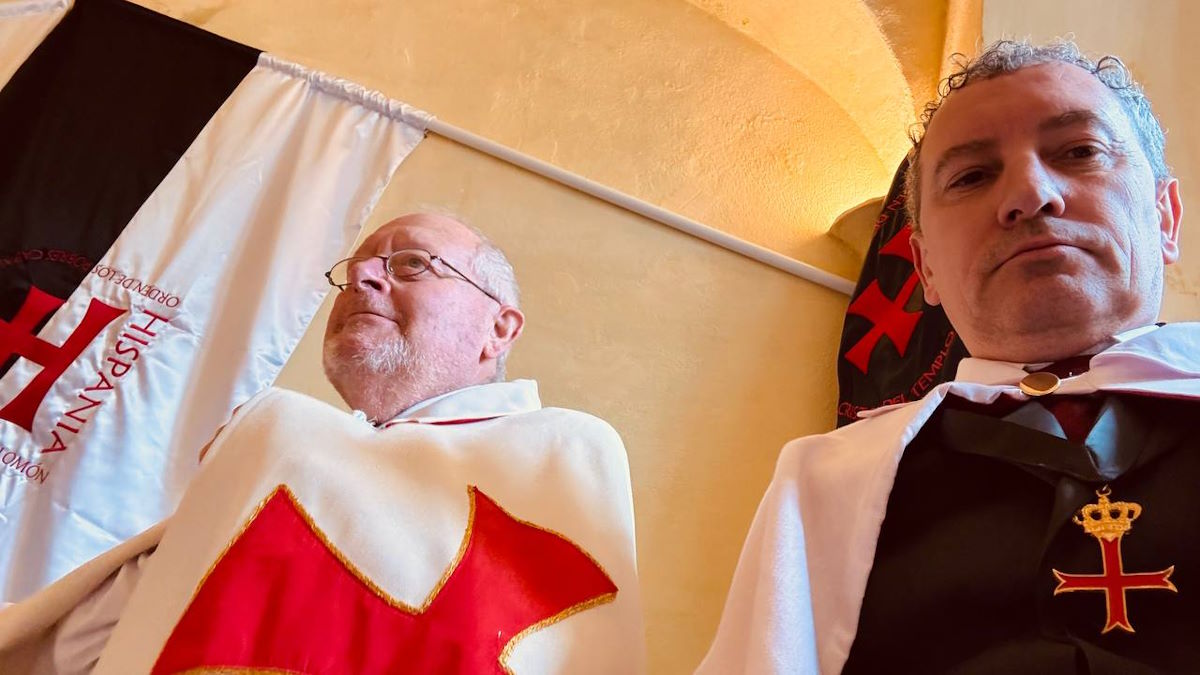
The Magisterial Council of the OSMTHU, host of the Grand Priory of Spain and its Grand Prior General Fr+ José Miguel Navarro, took part in the traditional celebrations of Holy Week in Palma del Rio, Córdoba, at the invitation of the Brotherhood of the Holy Sepulchre of that Spanish town.
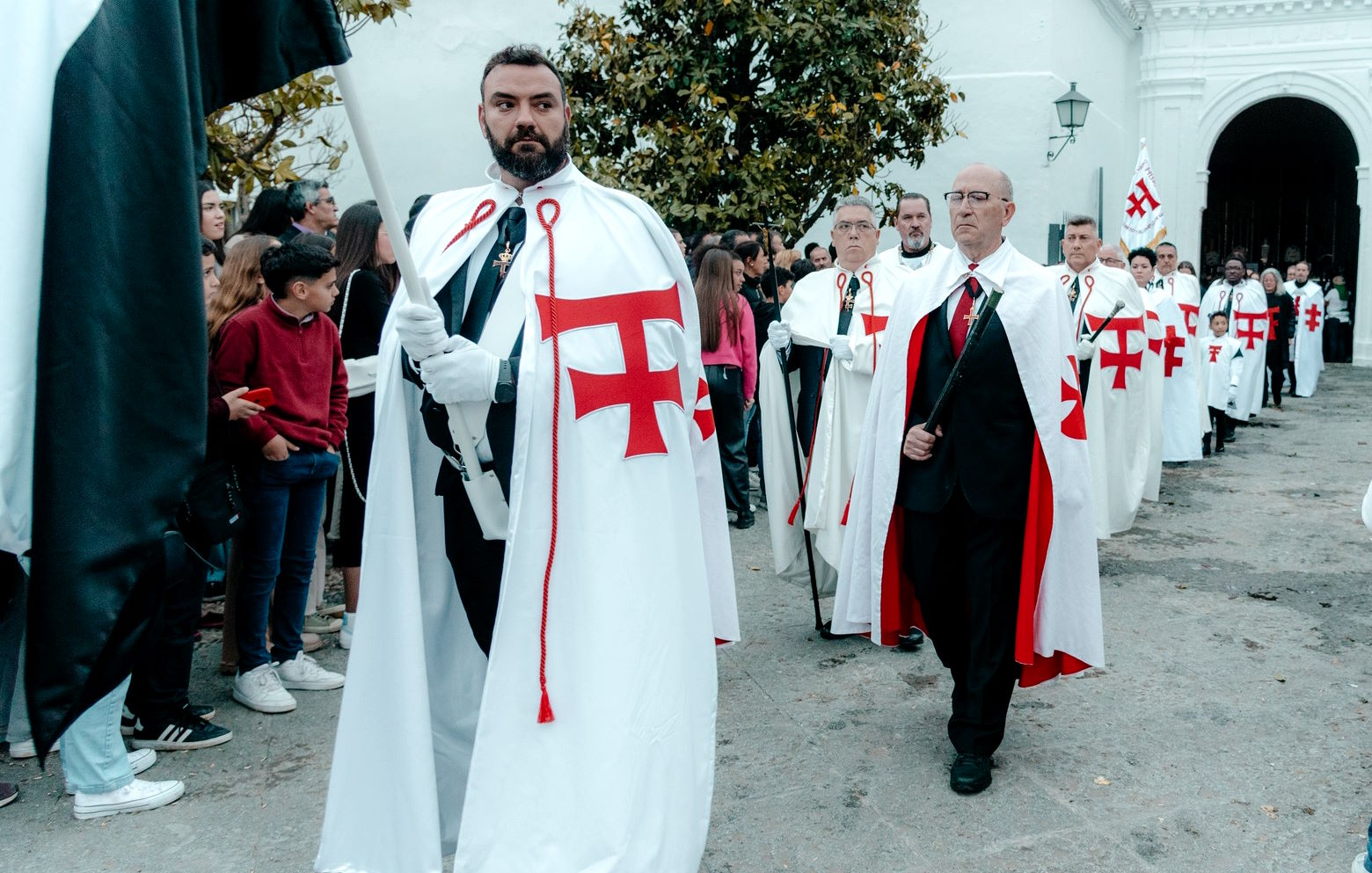
The Holy Week celebrations are one of the highlights of the Catholic liturgical year in Andalusia and famous worldwide for the exuberance and faith of its brotherhoods, who parade on the days of Passion wearing their characteristic liturgical robes, hoods, and long cloaks, accompanying the Lord’s Passions, concluding with the departure of the Dead Lord followed by the Virgin of Sorrows, in mourning. The Order took its place in the processions, despite the rainy weather that threatened to cancel the traditional procession.
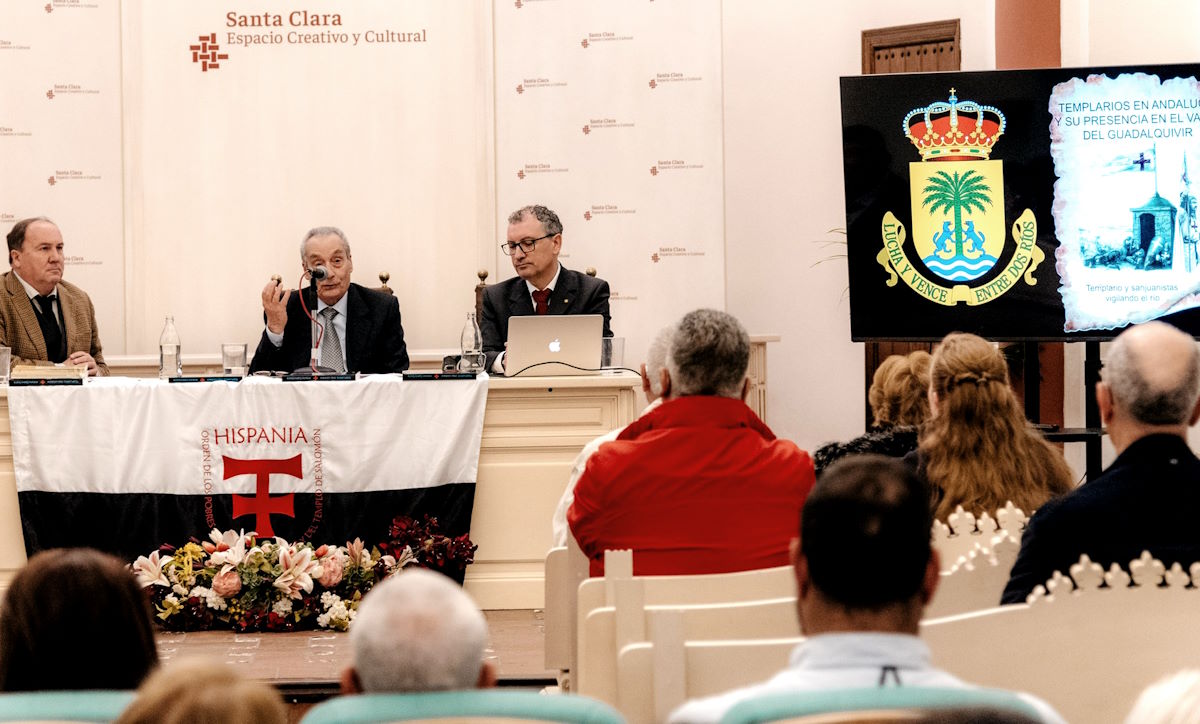
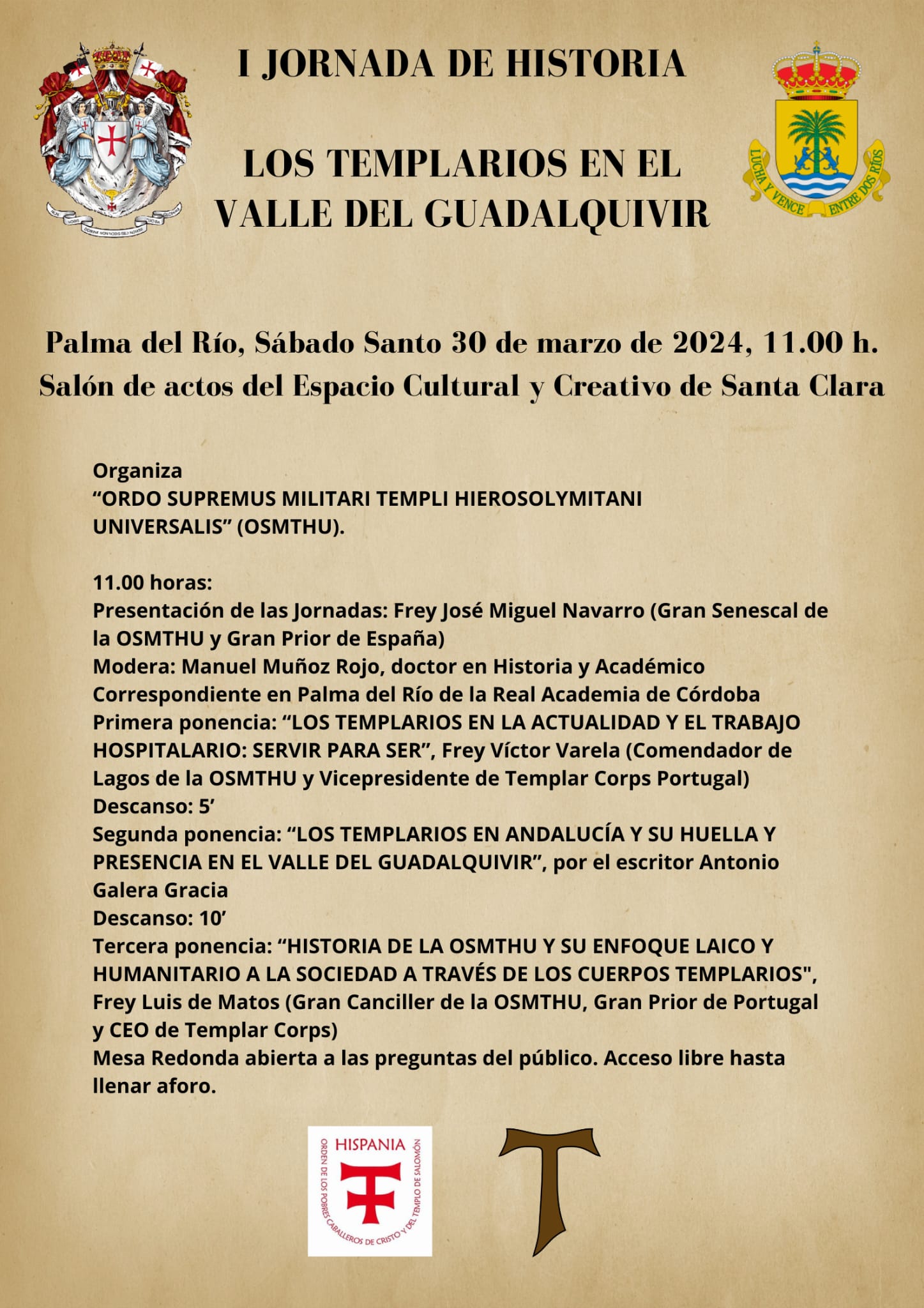
The OSMTHU joined in supporting this manifestation of faith. At the same occasion, a Conference was held, with the participatio of various different branches of the Order of the Temple from various countries, as well as a cultural event with the support of the Municipality of Palma del Rio, in which the Grand Prior Fr+ José Miguel Navarro, Commander of Lagos, Portugal Fr+ Victor Varela Martins, Chancellor Fr+ Luis de Matos (via video), Manuel Muñoz Rojo, Doctor in History and Corresponding Academic of the University of Córdoba, and writer/researcher António Galera García were speakers. These study and cultural sessions are expected to continue annually.
[Em Português]

O Conselho Magistral da OSMTHU, hospede do Grão Priorado de Espanha e do seu Grão Prior Geral Fr+ José Miguel Navarro, participaram nas comemorações tradicionais da Semana Santa de Palma del Rio, Córdoba, a convite da Irmandade do Santo Sepulcro daquela localidade espanhola.

As comemorações da Semana Santa são um dos pontos altos do ano litúrgico católico na Andaluzia e famosas em todo o mundo pela exuberância e fé das suas irmandades que desfilam nos dias da Paixão com as suas características roupas litúrgicas, de capuz e longos mantos, acompanhando os Passos do Senhor, concluindo com a saída do Senhor Morto seguido pela Virgem das Dores, em choro. A Ordem ocupou o seu lugar nos cortejos, apesar do tempo chuvoso que chegou a ameaçar a realização da procissão tradicional.
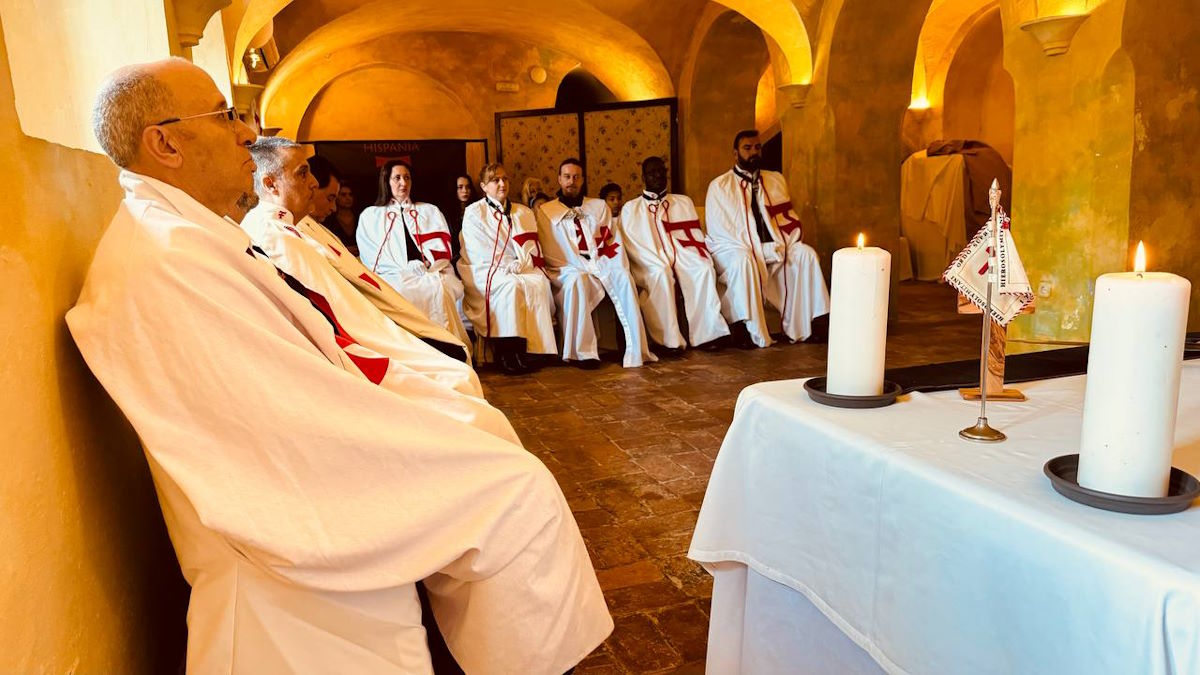
A OSMTHU juntou-se no seu apoio a esta manifestação de fé, tendo promovido a realização de uma Conferência entre vários ramos diferentes da Ordem do Templo procedentes de vários países, bem como um acto cultural com o apoio do Município de Palma del Rio, no qual foram oradores o Grão Prior Fr+ José Miguel Navarro, Comendador Fr+ Victor Varela Martins, o Chanceler Fr+ Luis de Matos (por video), Manuel Muñoz Rojo, doutor em História e Académico correspondente da Universidade de Córdoba e o escritor/investigador António Galera García. Estas jornadas de estudo e divulgação cultural deverão ter continuidade anual.
Video of the event:
Conference by Fr+ Luis de Matos, Chancellor OSMTHU [in Spanish]
OSMTHU – Secular Templi chega a Angola com Acção Solidária em parceria com Climédico e Ordem de Malta

A Climédico Angola – em parceria com a Ordem Secular e Militar de Jerusalém Universal (OSMTHU) – Secular Templi, o Templar Corps International e a Embaixada da Federação da Ordem de São João de Jerusalém Cavaleiros de Malta (KMFAP) – desenvolveu uma ação de responsabilidade social junto do Orfanato Mamã Muxima, em Luanda (Angola).
Através de consultas médicas gratuitas e da doação de bens alimentares e brinquedos, contribuímos para alargar o sorriso a dezenas de crianças que de todos nós precisam. Os brinquedos tinham sido alvo de um apelo durante a época natalícia que juntou dezenas de irmãos e irmãs da OSMTHU em Lisboa.
A Climédico Angola – marca do Grupo FORSAÚDE – orgulha-se de prosseguir o seu compromisso de estar ao serviço do crescimento de Angola.

Fr+ Alberto dos Santos, dono e Director Clínico do Grupo Forsaúde. Bom trabalho Templário!
Comemorações dos 705 anos da Ordem de Cristo e dos 30 anos do Grão Priorado de Portugal da OSMTHU

Decorreram esta semana as comemorações dos 705 anos da Ordem de Cristo e dos 30 anos da criação do Grão Priorado de Portugal da OSMTHU, em vários lugares do Algarve sob a égide da Comenda de Lagos.
No dia 14 a Comenda promoveu uma Conferência em conjunto com a Câmara Municipal de Lagos acerca da Ordem de Cristo e do Infante Henrique de Sagres, com uma intervenção de fundo de Luis de Matos, Grão Prior de Portugal, escritor, conferencista e conhecido pela sua abordagem simples e aberta às temáticas da Cavalaria Espiritual. Contámos com a presença da Vereadora Drª Sandra Maria Almada de Oliveira, da Câmara Municipal de Lagos, trazendo a celebração da Ordem de Cristo a Lagos e associando a Autarquia aos festejos, o que a Ordem do Templo muito preza.
Transmitida em directo através da página de Facebook da Comenda (https://www.facebook.com/comenda.laccobriga), rapidamente se tornou viral nos Grupos acerca de Templários e quando encerrou tinha registado 1.400 espectadores simultâneos, chegando ao final do dia com 4.000 visualizações e, 6.600 ao final de 3 dias, o que é um record absoluto para transmissões ao vivo desta Comenda.

De registar que mais de 20% dos espectadores têm IP no Brasil, com vários países acima dos 5%, incluindo aqueles onde as Comunidades Portuguesas são mais numerosas. As maiores congratulações são devidas ao Comendador Fr+ Victor Varela Martins e à sua equipa, incluindo os Preceptores locais, que, apenas duas semanas após as VI Jornadas Templárias, mostraram mais uma vez capacidade organizativa e empreendedora de que a Ordem se orgulha. Registou-se também a presença do representante do Comandante Regional da GNR e de diversas associações locais, assim como da Liga dos Combatentes, em Lagos e Castro Marim.

No dia 16 as actividades centraram-se em Castro Marim, que foi a primeira sede da Ordem de Cristo, a partir de 14 de Março de 1319. O dia iniciou-se com a inauguração no Posto de Turismo de uma exposição temática sobre os 30 anos do Grão Priorado de Portugal da OSMTHU, constituída por 7 painéis explicativos que irão viajar pelo país ao longo do ano de 2024 e 2025 levando o tema Templário a várias autarquias de norte a sul.

Com a presença do Vereador João Manuel Afonso Pereira, responsável pela Cultura, que sublinhou o aprofundar da colaboração entre a Ordem e a Autarquia desde a primeira Conferência Anual em 2019, o Grão Prior teve oportunidade de falar um pouco acerca da Ordem de Cristo e da singularidade da passagem de testemunho entre a Ordem do Templo e a missão marítima que viria a caracterizar Portugal no século XV.


Pela tarde o Ramo Secular da Ordem abriu o seu IV Capítulo Nacional, em que se discutiram temas relacionados com o plano de trabalho da Ordem para os anos de 2024 e 2025, reforçando as diversas linhas de acção, que incluem a Ordem Soberana, o seu papel no âmbito internacional e nacional, o Ramo Secular e o trabalho humanitário desempenhado pelo Templar Corps. Estiveram presentes os Comendadores do Grão Priorado Soberano de Lagos, Lisboa (Chagas) e Arraiolos, bem como o Grão Preceptor Nacional que teve a oportunidade de dar uma panorâmica acerca do Programa de Estudos interno, que vem adicionar novos recursos ao notável trabalho executado pelo anterior Preceptor, que inclui conteúdos exclusivos de base histórica e espiritual, bem como a plataforma online que permite o acesso permanente e remoto a toda a informação, segundo o grau de cada utilizador.

O dia acabou em muito boa disposição com um Banquete Medieval na Taberna do Velho Cavalinho do Fr+ Carlos Carmo, um eterno Templário e generoso anfitrião, divertido apaixonado pelo medievo, incansável divulgador da Ordem e de uma das épocas mais mal compreendidas da nossa História. Entre iguaria e bebida farta, se prolongou até altas horas a animação e o convívio fraternal.

Afinal, o homem tanto precisa de disciplina e ordem, como de um sincero sorriso e alegria no coração. Assim foi em Castro Marim. Que a Ordem prospere.

Ficam de seguida as mensagens a propósito da ocasião do Comendador de Laccobriga, Fr+ Victor Varela Martins e do Perceptor de Castro Marim, Fr+ Bruno Correia.

Fr+ Victor Varela Martins, Comendador de Laccobriga
Irmãos do meu Coração,
Foi muito bom poder contar com a vossa presença, tanto física quanto no apoio espiritual, nestes dias !!!
Cumprimos um ciclo ao Sul, no início de cada ano pedimos um esforço maior a todos os Irmãos para que se desloquem ao Algarve entre Fevereiro e Março mas é por um bem maior, um bem maior do que nós mesmos, é pelo nosso Priorado e pelo nosso Domine comum, é pelo Propósito da Cavalaria e de tudo o que Ela Representa…
Obviamente que cada um de nós sai reforçado, pois embrenhamo-nos de Amor Caritas, de expressões de Fraternidade e recarregamos a Energia e reforçamos a Cavalaria em nós próprios !!! Como Todos sabemos, Amar é ir ao Mar, e lá ir não é somente vê-lo é sim comungar dele, molharmo-nos… e é por isso que iniciamos o ciclo anual por aqui. Venha daí um bom ano para cada um de Todos nós e para a OSMTHU.
Não somos muitos, mas os que somos somos no número certo para fazer ressoar e manter viva a Cavalaria Espiritual e o Propósito do Templo hoje.
Um obrigado muito sentido ao Sereníssimo Grão-Prior e aos Oficiais do Priorado pelo apoio e por manifestarem sempre esta misericórdia para com os Irmãos do Algarve.
Agora vamos ao trabalho que o mundo ainda necessita de Nós.

Fr+ Bruno Correia, Preceptor de Castro Marim
Que a graça do nosso Senhor Jesus Cristo, o amor de Deus e a comunhão do Espírito Santo sejam com todos vocês.
Desde já quero agradecer humildemente ao nosso Digníssimo Grão Prior, ao nosso Respeitável Comendador de Laccobriga, pela caridade e pela dedicação, que dispuseram para que fosse possível comemorar/relembrar mais um aniversário da Instalação da Ordem de Cristo em Castro Marim.
Quero também agradecer a presença do nosso Solidário Preceptor Geral, os Respeitáveis Comendadores de Arraiolos e de Chagas, assim como a nossa irmã Dama, os nosso irmãos Cavaleiros e a nossa irmã escudeira.
Obrigado a Todos, de Coração, por terem contribuído para que a Tradição não fosse esquecida.
Christi Pax


Ordem do Templo OSMTHU Organizou a VII Conferência anual em Lagos, Algarve, com Destaque para Simbologia e Identidade Nacional

Lagos, Algarve – A Ordem do Templo OSMTHU reuniu uma série de conferências no dia 2 de março, trazendo diversos oradores que exploraram temas relacionados com a simbologia, a identidade nacional e desafios éticos. O evento contou com palestras de especialistas em diferentes áreas, proporcionando uma visão abrangente e aprofundada sobre temas relevantes. Abaixo, apresentamos um resumo das intervenções:
Pe. José Manuel Pacheco – “Símbolos e a Liturgia”
- Explorou símbolos do Novo Testamento, com destaque para a transfiguração.
- Abordou a presença de símbolos na liturgia, como as cinzas no início da quaresma.
- Refletiu sobre a importância da imagem e o papel da comunicação social na disseminação de símbolos.
- Concluiu incentivando a promoção da paz.

Jaime Ramos – “Organizações Morais e Desafios Nacionais”
- Analisou o papel das organizações morais na sociedade, destacando eventos históricos em Portugal.
- Abordou desafios atuais, como o envelhecimento populacional e a desertificação do interior do país.
- Refletiu sobre a importância de debater temas fundamentais, mesmo aqueles considerados politicamente sensíveis.
- Propôs a necessidade de preservar a memória histórica.
Luis Alves Costa – “Instrução versus Formação – Uma Perspectiva do Ensino”
- Diferenciou instrução (aquisição de conhecimento) e formação (desenvolvimento do ser).
- Destacou a responsabilidade compartilhada na educação, não sendo exclusiva da escola.
- Apontou a desconexão dos estudantes com símbolos nacionais e a língua, enfatizando a importância do significado.
- Recordou que os símbolos são a linguagem cifrada das aspirações humanas
- Utilizou o exemplo da igreja Santa Maria do Olival para ilustrar mudanças simbólicas no tempo.

Nuno Campos Inácio – “Simbologia Imaterial”
- Explorou a simbologia imaterial, incluindo tradições, rituais, e eventos festivos.
- Enfatizou a universalidade das festividades, que transcendem barreiras religiosas.
- Destacou a importância de preservar esse património imaterial.
- Sublinhou que a essência das festividades é universal e não está limitada às várias religiões. As festividades transcendem-nas. Celebram uma realidade que é mais vasta do que elas.
Pe. Carlos Aquino – “Simbologia na Liturgia e Experiência Viva”
- Abordou a visão do Papa Francisco sobre símbolos e a importância de tornar-se capaz de entendê-los.
- Destacou que a liturgia é composta por sinais e símbolos que conduzem à experiência viva.
- Enfatizou a autenticidade dos símbolos na comunicação do mistério.
- Defendeu que o homem moderno se tornou analfabeto e já não consegue ler os símbolos, questionando como podemos tornar-nos “capazes de símbolos”. Não se trata só de fazer uma interpretação intelectual, mas de a tornar numa experiência viva.

Manuel J. Gandra – “O Símbolo e Seu Significado”
- Analisou o símbolo como sinal de reconhecimento, considerando elementos como a direção de leitura.
- Explorou a interpretação neo-platônica do símbolo visível como reflexo de uma realidade invisível.
- Refletiu sobre a subversão de símbolos e suas consequências., dando abundantes exemplos depois de ter mostrado o mesmo simbolismo na iconografia tradicoinal.
- Concluiu afirmando que a subversão dos símbolos leva à subversão das ideias
Artur de Jesus – “Identidade Nacional e Símbolos”
- Criticou a falta de conhecimento sobre os símbolos nacionais, defendendo a necessidade de ensinar a identidade portuguesa nas escolas.
- Explicou o significado dos símbolos nacionais, como a bandeira e a esfera armilar.
- Ressaltou a importância de respeitar e preservar a herança cultural e histórica. A perda dos símbolos é o empobrecimento da nossa herança.

Luis Natal Marques – “Desafios Éticos da Inteligência Artificial”
- Questionou a compreensão de Deus e explorou as leis que governam a nossa existência.
- Abordou os desafios éticos da inteligência artificial, incluindo a questão das emoções das máquinas.
- Ressaltou o papel da ética diante das novas tecnologias.
- Concluiu com um desafio: todo (o ser humano) é mais do que o simples somatório das partes de que é feito; Assim, se todos os órgãos que nos compõem têm uma finalidade, qual é, afinal a nossa própria finalidade?
Rui Lomelino de Freitas – “Sofia Perene – O Despertar Interior Através do Símbolo”
- Apresentou o conceito de Sofia Perene, destacando o símbolo como meio de despertar interior.
- Questionou o significado pessoal dos símbolos e a jornada da imagem ao conceito.
- O conceito deve levar à experiência, caso contrário é estéril
O evento em Lagos proporcionou uma rica troca de ideias sobre simbologia, identidade nacional e desafios éticos, contribuindo para uma compreensão mais profunda desses temas fundamentais.

Um agradecimento muito reconhecido a Todos os participantes que se associaram a este nosso propósito de doar bens alimentares a uma instituição de apoio social.
Este é o resultado das doações de Todos vós nas Jornadas:
2 óleo
2 azeite
6 atum em lata
2 bolacha Maria – embalagens de 4 pacotes
2 açúcar
2 farinha
3 salchicha em lata
5 Macarrão
7 esparguete
24 arroz
5 grão
2 feijão
2 feijão em lata
1 amêndoas de chocolate
A Todos os participantes e aos doadores o nosso obrigado.
O evento terminou com uma doação de sangue no Hospital de Portimão no dia 3 demarço.


Magisterial Council of the OSMTHU visits the Order of the Dragon
On the 15th of October, a formal delegation of the Templar Order was a guest within Stone Gate Tower, which is the headquarters and keep of the legal successor of the “Order of the Dragon” – “Fratres Draconic Croatici”.

Our delegation was led by members of our Magisterial Council, the Grand Prior of the USA – John von Blauch and the Grand Prior of Croatia – Lovro Tomašinec.
The delegation of Grand Priors were wonderfully received by Grand Master of Dragons – Mislav Grgić and their Master of Ceremonies – Željko Heimer.
The Order of the Dragon and the OSMTHU represent contemporary successors of the great tradition of chivalry dedicated to the protection and promotion of both the physical and spiritual patrimony of Knighthood.

Plans for future collaborations between our institutions were discussed, and both Grand Priors were regaled with explanations of the many extraordinary features of both the historical headquarters of the “Dragons” , as well as those historical customs still celebrated by them. between our two respectful chivalric Orders and possible joint events which will further promote our history, values and culture. Stay tuned for more news!
On the 16th of October our former delegation departed from Croatia for Belgrade, Serbia, where they participated in the “First Informal Global Conference of the World Templar Nation”, hosted by the Grand Priory of Serbia and the Magnus Magisterium New Jerusalem, (OSMTH) and their Grand Prior – Nenad Davidović.
There are no words that can describe the magnanimity of our Serbian hosts. The outstanding hospitality received by all delegates and attendees of the conference on behalf of the Serbian Brethren remains most memorable and appreciated .(of our Brother in Serbia and the way they receive)
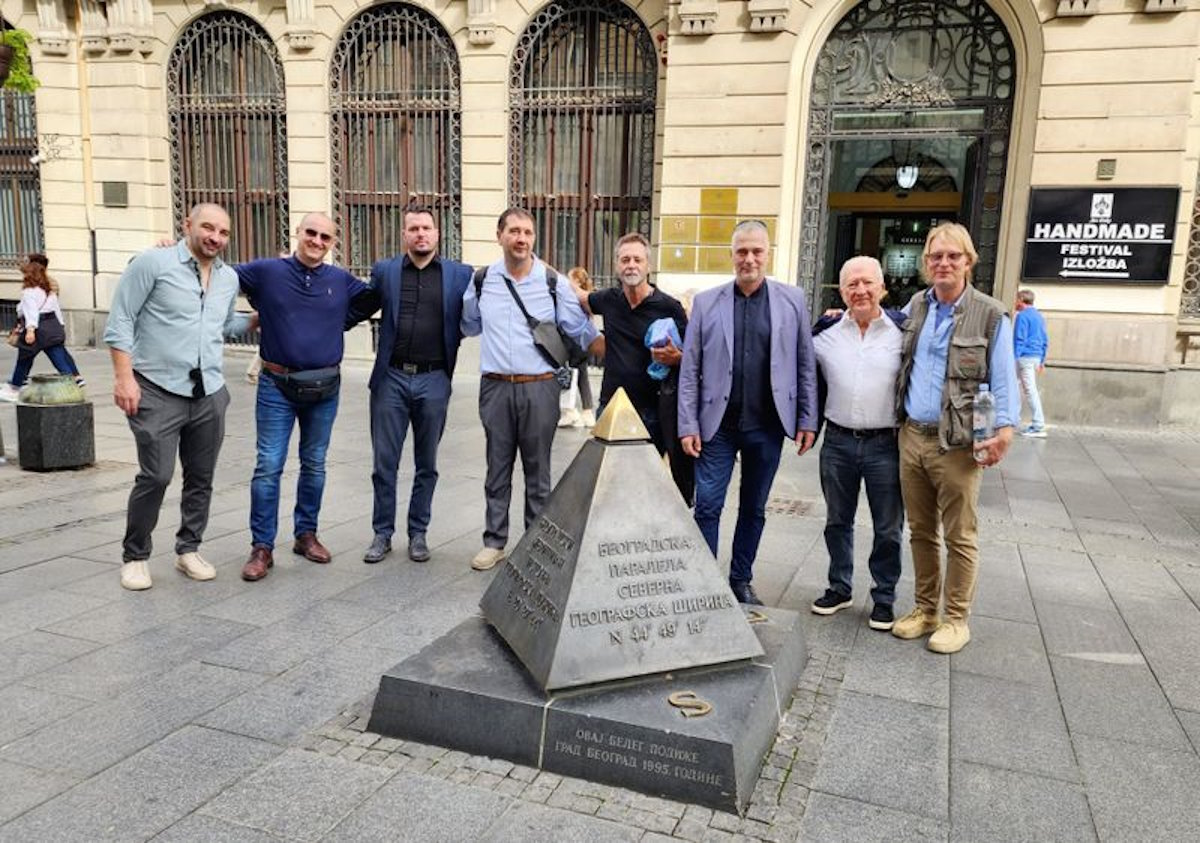
On Friday morning, we were personally escorted on a walking tour of Belgrade by several Serbian Knights and a Dame. Encompassing many sights, the tour included the historic fort of the old city, perched overlooking the junction of the Sava and Danube rivers, as well as a visit to the magnificent and lavishly adorned Serbian Orthodox Cathedral of Saint Sava, followed by lunch.
Members of the different Templar branches attended the Conference on Friday afternoon and Saturday morning. The Present and future visions of the Templar Order were discussed, What role does the Templar Order possess in contemporary society, and what, if any role do we play in future civilization?!
A conclusion was that action is imperative to accomplish anything. Harmony and a common intent must reign among the different branches of the Order. Through the Respecting and supporting of each other, we can develop a fundamental and actionable plan. A common purpose we all will strive to implement can define our Order now and for the future.
The ultimate and stated goal of all Christians, more importantly those who claim to be of the Templar lineage, is to strive for a better and united world through both political and social cohesion, as well as a commercial inclusiveness on a global scale.
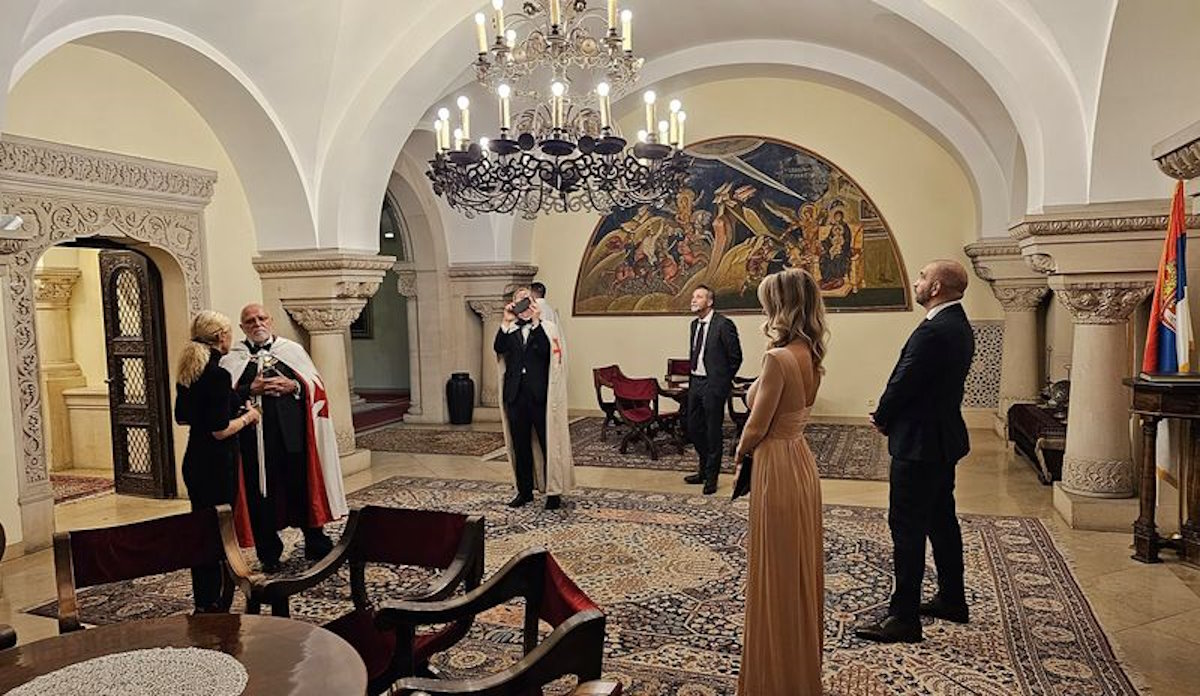
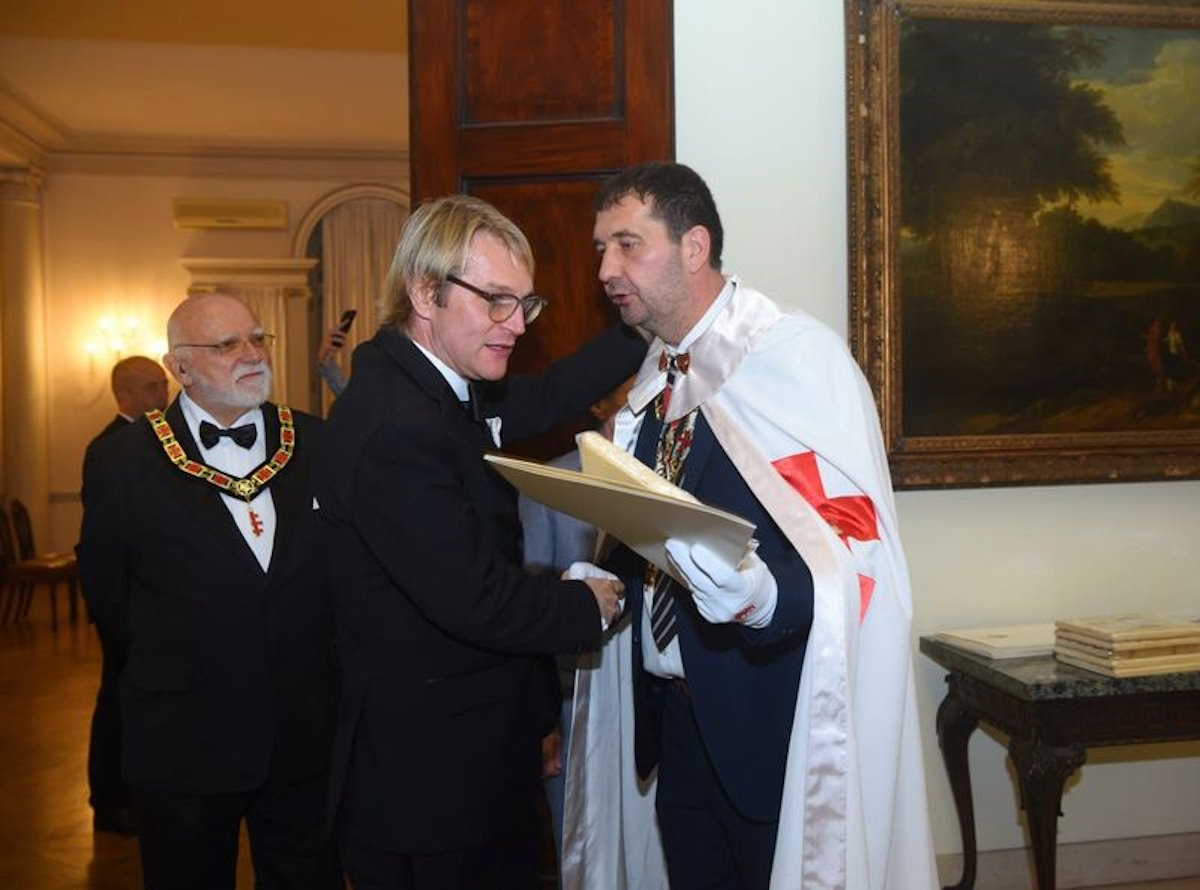
The culmination of our visit to Serbia occurred at the Royal Palace, the White Palace, where the reception of new knights and dames was celebrated with a grandeur befitting the Nobility of Humanity, the Chivalry of Heart and Mind.
This event met the highest of possible standards for any group, as can be seen in the pictures. No further explanation or description is needed, as a “Picture is worth a thousand words”
Grand Priors John and Lovro were also privy to exclusive access to the entire estate with personal and expert guide mrs.Tatiana.
Attending the events where Templars meet and discuss common ideas and goals is always a privilege and we are looking forward to the next chance to strengthen the bonds between our Brothers and Sisters!
Novos Cavaleiros Seculares em Oeiras

O Ramo Secular da OSMTHU – Ordem do Templo [Secular Templi] cresceu este inverno, integrando mais uma dezena de novos Cavaleiros. A Milícia Espiritual reuniu-se na igreja do Palácio do Marquês de Pombal em Oeiras no dia 2 de Dezembro, para celebrar a fraternidade e passar as chaves da Cavalaria a mais alguns digníssimos Irmãos.

A manhã foi preenchida pela Instrução de Cavalaria e Velada de Armas. Os postulantes tiveram a oportunidade de ouvir as palavras tradicionais com que a Ordem preparava os seus candidatos. Foi descrito o que seria um dia completo numa Comenda do Templo antes da Armação. De seguida o grupo pôde tirar dúvidas e explorar alguns assuntos que escaparam durante o período prévio de 3 meses de formação online. A manhã terminou num indisfarçável ambiente de alegra antecipação para as cerimónias que se iriam seguir. Um almoço fraternal retemperou os corações.

Pela tarde a igreja encheu-se com os familiares dos candidatos, os Irmãos da Ordem e alguns convidados. Uma vez todos nos seus lugares, deu-se entrada ao cortejo do Irmãos e ao Grão Prior, que abriu o Capítulo. Dada uma curta explicação sobre a natureza da cerimónia – uma Armação, sublinhou – justificou ainda o motivo de ser um acto aberto em que as famílias e convidados podem participar. Antecipou que a Ordem tem, adiante, momentos de Cavalaria de carácter mais reservado, que aguardam aqueles que forem mais aplicados, mas que a Armação é um compromisso público em que o Cavaleiro se coloca ao serviço da Ordem tendo por testemunha o público – para o qual passa a ter novas responsabilidades. Não se trata de uma reunião de conjurados, secreta, de homens que juram lealdade entre si, e sim uma cerimónia solene de compromisso para com todos os homens e mulheres do mundo, ao serviço da Ordem e envergando as suas vestes e valores. É um compromisso para todos os dias da vida. Não desvanece quando se arruma a capa no armário. Capa, espada e jóia são meras representações sensíveis de uma nova orientação ética, permanente e imperativa.

Um a um, todos assumiram o seu compromisso. Um a um, frente ao Grão Prior, todos se juntaram à cadeia ininterrupta de Cavalaria.
As cerimónias do dia encerraram com uma emotiva interpretação colectiva do “Non Nobis” na magnífica versão de Patrick Doyle, que ecoou na belíssima igreja barroca oitocentista como uma recordação familiar de outros tempos já passados, mas convocados à actualidade pela Ordem.
Estão de parabéns os novos Cavaleiros António Lourenço, KTJ; Carlos Martins, KTJ; Daniel Gomes, KTJ; Diogo Branco; Erik V, KTJ; Nuno Santos, KTJ; Pedro Fernandes, KTJ; Pedro Miranda, KTJ e Rafael Redondo, KTJ. A Ordem tem para vós muito trabalho, o muito penar e o pão e a água da fraternidade.

Armações do Templo

Oeiras, Igreja do Palácio do Marquês de Pombal
2 de Dezembro de 2023
Acesso gratuito, sujeito a inscrição prévia
templi@seculartempli.org
Heróis do Quotidiano

Quem nos conhece sabe bem que propósitos nos movem, quem não nos conhece, é a hora de dar atenção ao seu vizinho, ao seu colega de trabalho, ao idoso ou ao casal jovem na sua rua. Pois o que nos move são as famílias que são verdadeiros heróis do quotidiano, que fazem uma engenharia orçamental para alimentar os seus a cada dia e que, no final do mês já pouco resta, mas que apesar de tudo conseguem tem uma palavra agradável, uma oração ao Altíssimo e um sorriso estampado no rosto sofrido. São demasiadas.
É por eles que estabelecemos pontes, que procuramos inspirar outros a fazer o mesmo e mais e melhor!
Há uma semana, a nossa unidade local de Lagos do TemplarCorps foi contactada para ajudar a recolher quase 500kg de alimentos frescos e congelados (carne e peixe), frutas e legumes; de pronto se fez a recolha e no mesmo momento foi contactada a obra social de uma das igrejas locais para que estes bens fossem entregues a quem tenha a necessidade. Esta semana recolhemos mais 400kg de alimentos. Só este mês de Outubro, o Templar Corps no Algarve fez chegar ao Heróis do Quotidiano quase 1 Tonelada de alimentos. É uma gota no oceano. Queremos fazer mais e melhor.
Quem nos contactou não o fez por criarmos uma rede de necessitados à nossa volta mas sim porque identificámos entidades idóneas e de obra notável aos quais é necessário dar a mão e ajudar a cumprirem a sua missão, porque realizamos as missões que nos são imputadas, com dedicação e zelo, porque não retiramos dividendos do bem que ajudamos a concretizar. Quem nos conhece sabe bem que o que o TCI realiza realiza-o por completo.
O TCI cumpre-se quando realiza o seu trabalho de forma discreta, voluntária e expedita. Anunciar a nossa actividade assistencialista serve tão somente para nos responsabilizar a realizar o que temos de realizar, mais e melhor; para dar conta a quem em boa confia de que a missão está cumprida; assim como a inspirar outros a replicar e a ampliar, melhorando.
Que o espírito de voluntariado e de trabalho cooperativo para um mundo melhor possa ser espalhado por todos os corações e que a Cavalaria Templária seja parte do seu impulso.
Para ajudar o Templar Corps entre em contacto connosco em volunteer@templarcorps.org
IV International Conference in Almourol

The weekend of the 13, 14 and 15 of October 2023, the Templar Interpretation Center of Almourol (CITA), Portugal, was host of the IV International Conference on Spiritual Chivalry, Templars and Templarism. For three days, scholars, specialists and the public were able to hear about new research on the Templars and debate a wide range of topics. Four new books were presented, including an expanded reprint of the original catalogue of the 2019 exhibition, that had since been out of print. The Conference is the largest and most prolific international Templar Event.

The Conference started on the evening of Friday 13, with the Mayor of Vila Nova da Barquinha, Fernando Freire, welcoming speakers, the public and members of the OSMTHU, whose Master, António Paris, attended the event. He remembered the date and the imprisonment of the Templars, adding that in 1195 Master Gualdim Pais died in Tomar on the 13 of October as well. Writer and Past CITA Curator Manuel J. Gandra, gave a brief presentation about the Conference and the topics to be discussed in the next couple of days, presenting the reprint of the first catalogue. Master Antonio Paris, who had flown from Rome to attend the event, spoke briefly about the importance of the event and the opportunity of cooperation presented by the fact that several branches of the Order today were invited to come to Almourol and share the knowledge and passion about Templar history and values. On midnight the Grand Priory of Portugal of the OSMTHU conducted a short, but evocative ceremony, in memory of the fallen Templars.
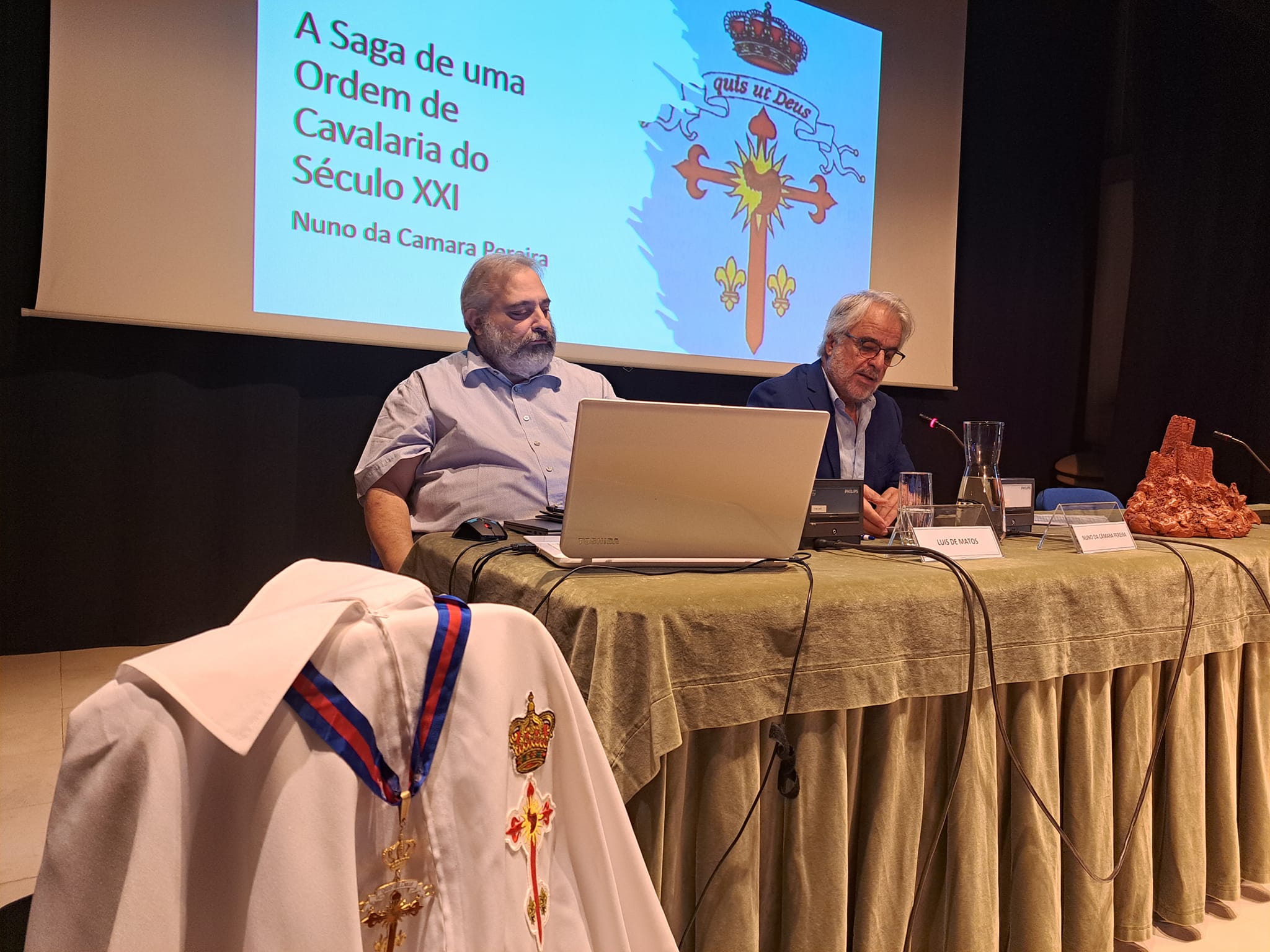
The proceedings started on Saturday, 14 with the presentation by Dom Nuno de Bourbon da Camara Pereira of a paper titled “The Saga of an Order of Chivalry of the 21st Century” about the recent history and court disputes of the Order of the Wing of Saint Michael. Founded in the 12th century by King Afonso Henriques, the Order was revived several times in history and had been in the center of a dispute between Dom Duarte Pio, head of the house of Braganza, and Dom Nuno Bourbon, founder of the last revival of the Order in 1981. The dispute was recently settled out of court, with the mediation of the Archbishop of Evora, resulting the the full reinstatement of rights to Dom Nuno as its Grand Master.
French writer and researcher Remy Boyer followed suit with “Figures of Perceval, archetype of the Knight”, a deep piece on the evolution of Perceval within the Quest, with all his adventures and challenges, a blueprint for Chivalric Initiation. The dichotomy between the Grail and the Spear was explained and the question of “who does the Grail serve?” that had to be formulated by Perceval once he saw both objects during the Fisher Kings banquet, pointed out as one of the symbolic keys of the Quest.
Heraldist David Fernandes da Silva spoke about “Catechesis and Confraternity, Examples and Thoughts”. He explained the role of catechesis as a source of testimony and the chain of tradition for the early communities, projected along the ages, giving some examples related to the Templars, including the “Non Nobis…” Psalm and the usage of the patée cross. He then explored the matter of the Templar brothers that were not professed but lived under the rule of the Order in Templar houses. To this level he called the “confraternity” as opposed to the “fraternity” of those who received the ordination.

After lunchtime the Templar Encampment was opened in the courtyard in front of the auditorium. For two days the Tomar Honoris group from Portugal and the Baucan group from Spain staged medieval reconstitutions that included dances, games and the reenactment of sword fight techniques.

The afternoon opened with João Pedro Silva, past Preceptor of the Portuguese Grand Priory, who gave a very detailed view of the procedures against the Templars in France, in his “The Templar Processus”. All the motivations by Philipp, the Fair and his dealings with Bertrand de Got (later Pope Clements V) were outlined. The subsequent fight for domination of the court proceedings between King and Pope, both wanting to be the ones spearheading the events, was explained. The account of the last days of the process and the eventual suspension of the Order was also detailed, giving the audience a vivid account of a subject that is usually wrapped in misinformation and attempts to oversimplify one of the most compelling court procedures of the middle ages.
The day finished with researcher and Associação Saudade’s VP, Virgílio Alves, and his “The Cathars in Portuguese Templar Territories”. In a long and detailed research paper, Virgílio Alves gave the audience the origins, context and history of the Crusade against the Albigensis in the 13th century, focusing then on the escaping Cathars and the help provided by the Order of the Temple, including in escorting a large number of “bons hommes” to the Portuguese region of Castelo Branco, logistical headquarters of the Portuguese Templars.

On the 14th, Sigillum Templi’s president Victor Padilla Nieto from Spain opened the proceedings with his “Tacuinum Sanitatis, and its influence on the Templar Order”. It was a presentation that exposed the influence of the Tacuinum Sanitatis, a set of ancient sanitary rules related to food preparation and health habits, that was fundamental for the Primitive Rule’s prescriptions on hygiene and food on the daily life of the Order.
Luis de Matos, International Chancellor of the OSMTHU, spoke next remembering a short passage of the letter of Bernard of Clairvaux to the Templars in which the military actions of the Order are justified by Christs own rage in the Temple (Mathew 23). He then expressed how that passage is also an inspiration when it comes to the state of Templarism in the world today, setting himself apart of the whole movement – that he said to be incapable of defending or representing. He concluded by stating that it’s increasingly difficult and alienating to be a traditionalist in Portugal, giving a few examples of how the authorities mishandle the administration of culture and old Templar monuments in the country.
The last leg of the Conference was opened by Bulgarian Professor Yuri Stoyanov, of SOAS University of London, who offered the paper “The Importance of Russian and Eastern European Museum and Archival Collections for Study of the Historical Knights Templar, Spiritual Chivalry and Templarism”. He traced the importance of many pre-war archival sources on Chivalry and Templarism that were scattered and disappeared after World Wars I and II. Many of these have since surfaced in Russia and Poland and hold critical information on subjects such as the 18th century Swedish (Templar) Rite of Freemasonry, the Order of Malta tradition in Saint Petersburg and the Templar Orders of the early 20 century in Russia.

The Conference was closed by researcher Manuel J. Gandra with his “Did the Templars Profess a Secret Doctrine? Thoughts on a Loaded Topic”. By dismissing right from the start the two main popular references to a secret doctrine in the Order: the Baphomet, the Statutes of Master Roncelinus, Gandra was able to concentrate on the several failed attempts made by revivals of the Order in the 18th and 19th century to be recognized the the Portuguese Order of Christ, as the sole legitimate pure lineage at the time. By studying archeological findings made at the Almourol Castle and architectural iconographic elements still visible in the Convent of Christ – including those of an hermetic and rosecroix background over 100 years older than the German Manifests – Gandra explored some of the canons of a doctrine that is visible and intelligible in Portuguese Templar sources, but unknown to the scholars still today.
Overall, the IV Conference was an absolute success. It was heavily attended, the communications were original, interesting and informative and the conversations that took place during the intervals show great promise for future projects about the Templars. Next year, put it on your calendar: 13 and 14 of October 2024 the destination is Vila Nova da Barquinha / Almourol, Portugal.
Toledo Congress Gathered Templars in Talks About Future Cooperation
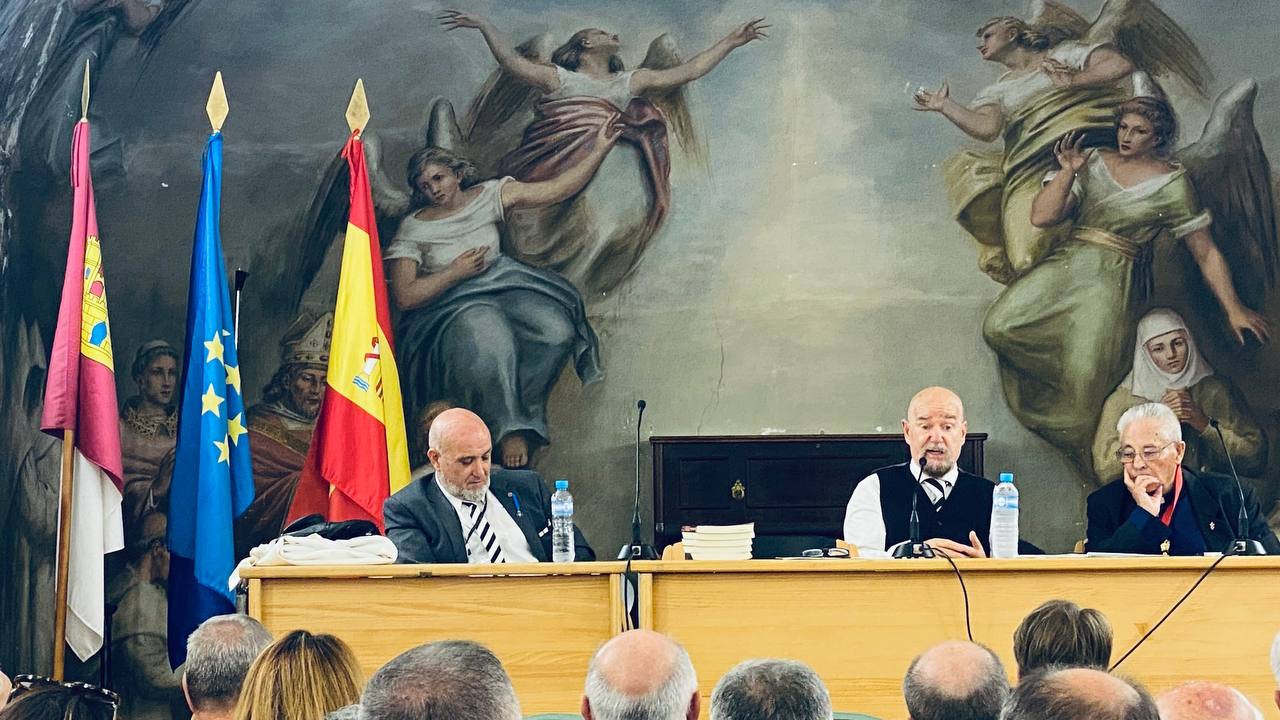
In celebration of Saint-Michael, the Grand Priory of Spain OSMTH-MM under Grand Prior Fr+ Francisco José Fernandez Nieto Caballero, promoted an International Congress in the city of Toledo, Spain that was attended by over 50 Knights and Dames from a dozen different branches of the Order.
Along the three days of the event, the problems contemplating the Order today were discussed, with many references to the divided nature of the current organizations and the special need to find ways to cooperate and build bridges of common understanding.
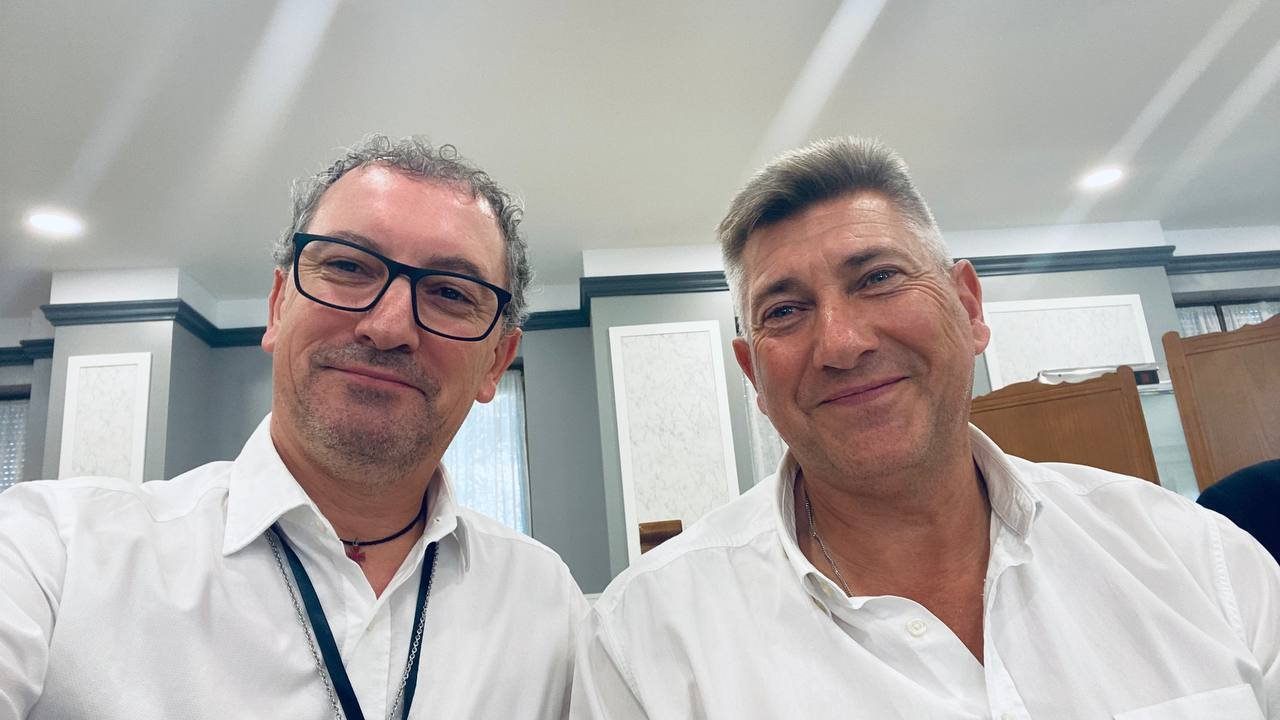
The OSMTHU was represented by Fr+ José Miguel Navarro, Grand Prior of Spain and Seneschal of the OSMTHU Magisterial Council, in representation of Master Fr+ Antonio Paris and the Portuguese delegation, headed by Commander Fr+ Victor Varela Martins and two other members, in representation of the Portuguese Grand Prior Fr+ Luis de Matos.
The final result was very positive and it is expected that a new Congress will take place in 2024 to build on the many points of agreement reached in Toledo. The OSMTHU wishes to congratulate Fr+ Francisco José and his Grand Priory for his work and leadership.
Convento de Cristo 2023

Informações: incursoeshermeticas@gmail.com
A partir de hoje, os visitantes do Convento de Cristo, em Tomar, já poderão apreciar a fachada ocidental da nave manuelina, que inclui a famosa Janela Manuelina, ou do Capítulo, após obras de restauro na ordem de um milhão de euros. Venha connosco no dia 27 descobrir os segredos do Convento de Cristo. Visita guiada por Luis de Matos.
27 Agosto, 10:30h; Visita guiada: 35€ [Entrada no Convento de Cristo é gratuita ao Domingo; levar Cartão de Cidadão]; almoço livre; a visita termina pelas 18h
Inscrições: incursoeshermeticas@gmail.com
Rota dos Templários. Castelo de Almourol já pode ser visitado numa sala a três dimensões
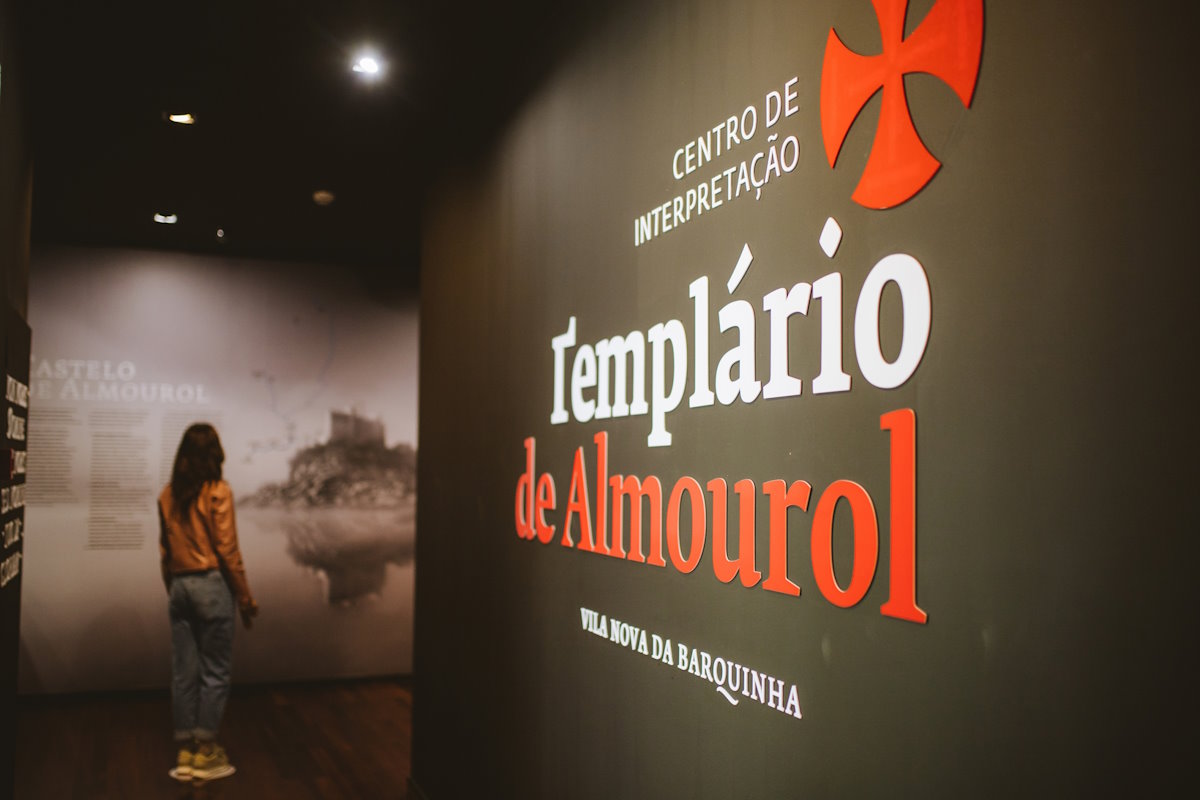
Vila Nova da Barquinha continua a inovar no setor do turismo. Registo, neste particular, para mais uma mais-valia que é colocada à disposição dos turistas – e não só – principalmente para todos quantos, por questões de mobilidade, não podem visitar o Castelo de Almourol. Está, assim, em causa a inauguração de uma sala de visita imersiva, a 360°, nova acessibilidade que agora é realidade no Centro Cultural, precisamente no Posto de Turismo, num edifício que já tem o Centro de Interpretação Templário de Almourol, sem dúvida uma das maiores atrações histórico-culturais do concelho e do Médio Tejo. E foi perante uma atmosfera Templária que Fernando Freire, presidente da Câmara de Vila Nova de Barquinha, abriu a sessão propriamente dita, referindo que a Rota dos Templários se pretende assumir como um produto turístico, reforçando que está em causa um trabalho de equipa. Jorge Simões, segundo secretário da Comunidade Intermunicipal do Médio Tejo, fala da concretização de um trabalho muito importante, mais ainda para pessoas que não conseguem, por meios próprios, visitar o Castelo de Almourol. Pedro Machado, presidente da Entidade do Turismo do Centro de Portugal, também marcou presença e destacou o papel relevante de cada um dos municípios da região, reforçando que Vila Nova da Barquinha tem um conjunto de componentes de ativos diferenciadores. Assista ao vídeo editado pela nossa redação.
Escrever na Agenda: Visitar a Taberna Medieval Velho Cavalinho em Castro Marim
Entrevista do Irmão Fr+ Carlos Carmo, KTJ, dono da Taberna Medieval Velho Cavalinho, ao Canal Ayamonte Interesa. Para uma experiência gastronómica e cultural única. Em Castro Marim, junto ao Castelo da Ordem de Cristo.
New Knights join Secular Temple in Portugal
[Text in Portuguese follows at the bottom]
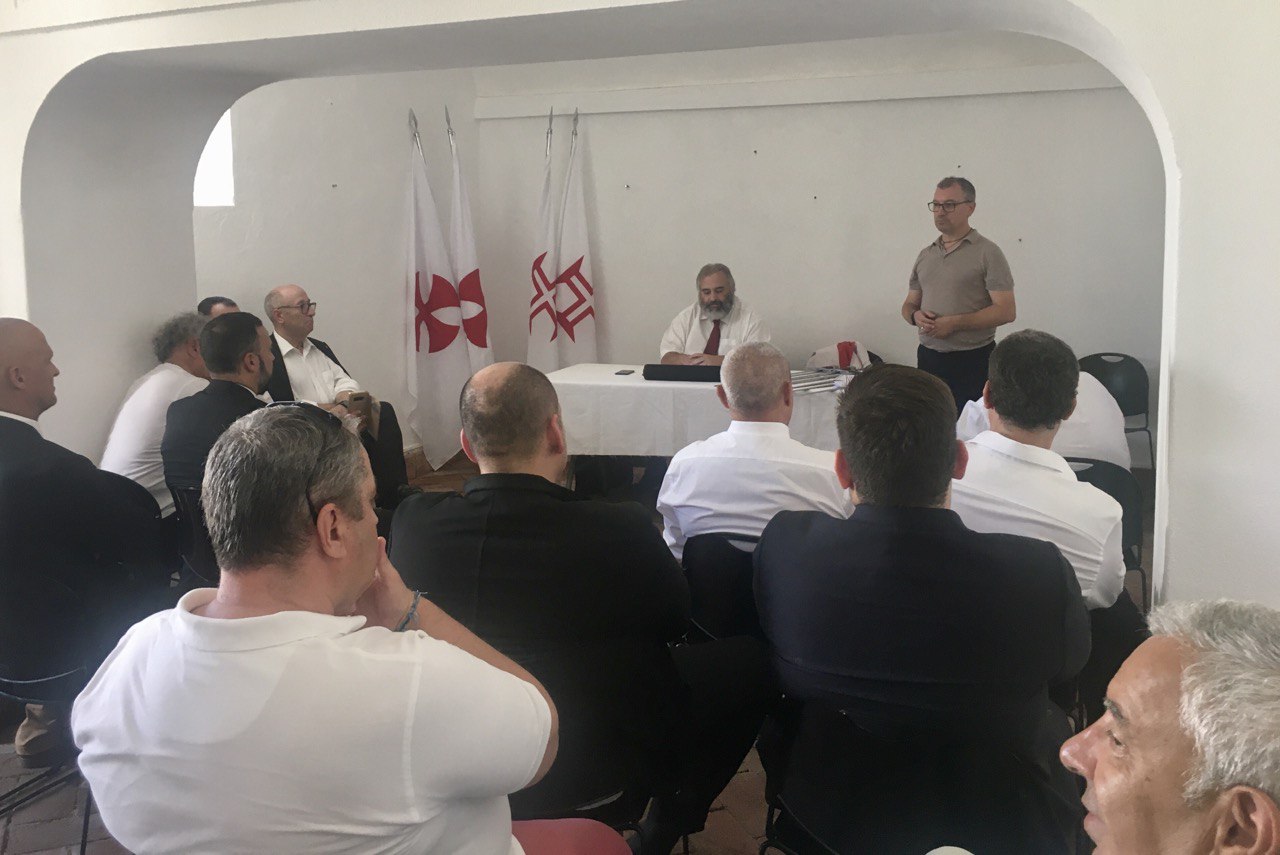
A truly admirable day of Chivalry took place this weekend in Lagos, Portugal, where the ranks of the Secular Temple, under the OSMTHU, keep growing and getting stronger, bringing to life a unique contemporary view of Templarism, firmly rooted in the past tradition of immutable values, yet with the eyes unapologetically looking on to the future.
The weekend long activities took place on the historical Forte da Ponta da Bandeira, vigilant over Lagos’s harbor, seating in the strategic location where Prince Henry the Navigator’s Caravels took to the sea in search of Prester John and a world of unknown dangers and fears.
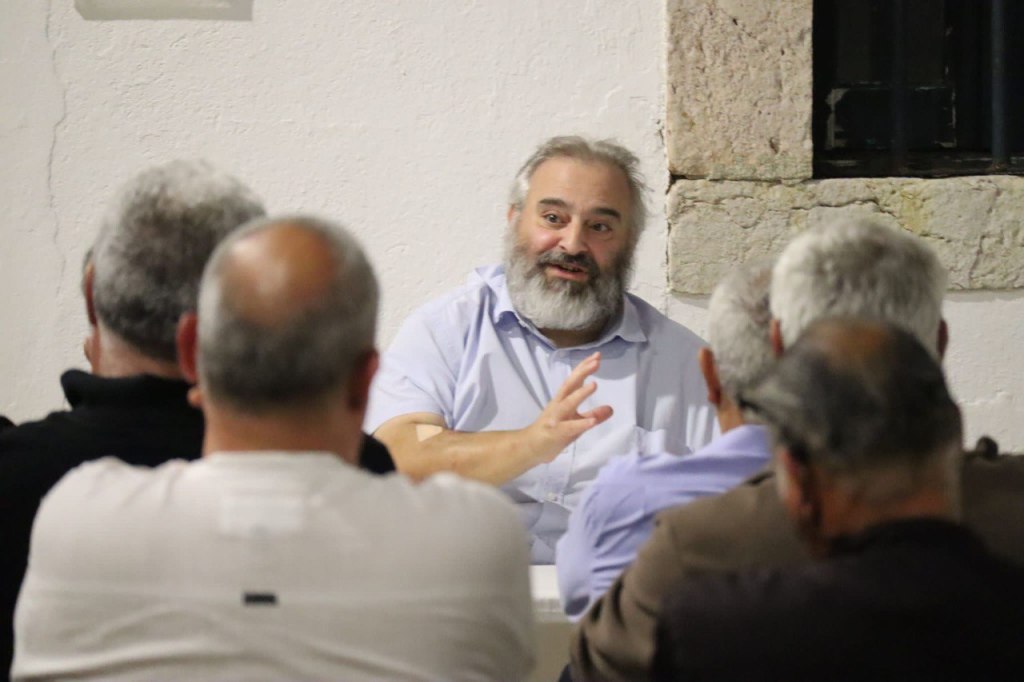
On Friday Fr+ Luis de Matos, Grand Prior of Portugal and Chancellor of the Magisterial Council of the OSMTHU under Master Antonio Paris, in a speech took a long and detailed look at Templar History, comparing it to the several states of the primary Greek elements of matter, from the dense Earth stage, when the Order gathered territory and land, to the Water stage with the building up of the Templar Fleet, to the Air and Fire stages with the imprisonment of the Master in Paris and the martyrdom of March 1314 by fire. In parallel, the History of Portugal, with a similar cycle, heavily influenced by the Order of the Temple during the Earth stage of consolidating the Portuguese territory and the Water stage with the Discoveries launched by the Order of Christ, was also remembered. Fr+ Matos has drawn surprising analogies and comparisons, moving on to an inevitable progression in which Order and Nation share a joint Destiny. The discussion that followed was fascinating, with the audience participating and engaging with the subject in a very illuminating and enthusiastic way.
The program for the next day had to be changed due to unforeseen circumstances. The Mayor of Lagos was presiding over the Graduation Ceremony of the Templar Corps Class of First Responders and Forest and Urban Fore Support, however the Portuguese Civil Protection Authority activated the Delta Level of the National Operational Directive on Rural Fire Prevention on June 30, actively summoning all available Templar Corps graduates that are on their stations at the service of the National Authority, ready to spring into action. The rural and forest fire season of 2023 is feared to be the most dangerous of the last few years due to the severe draught that affects the country and particularly the Algarve region, where the Templar Corps headquarters are located. The ceremony will take place at the end of October.
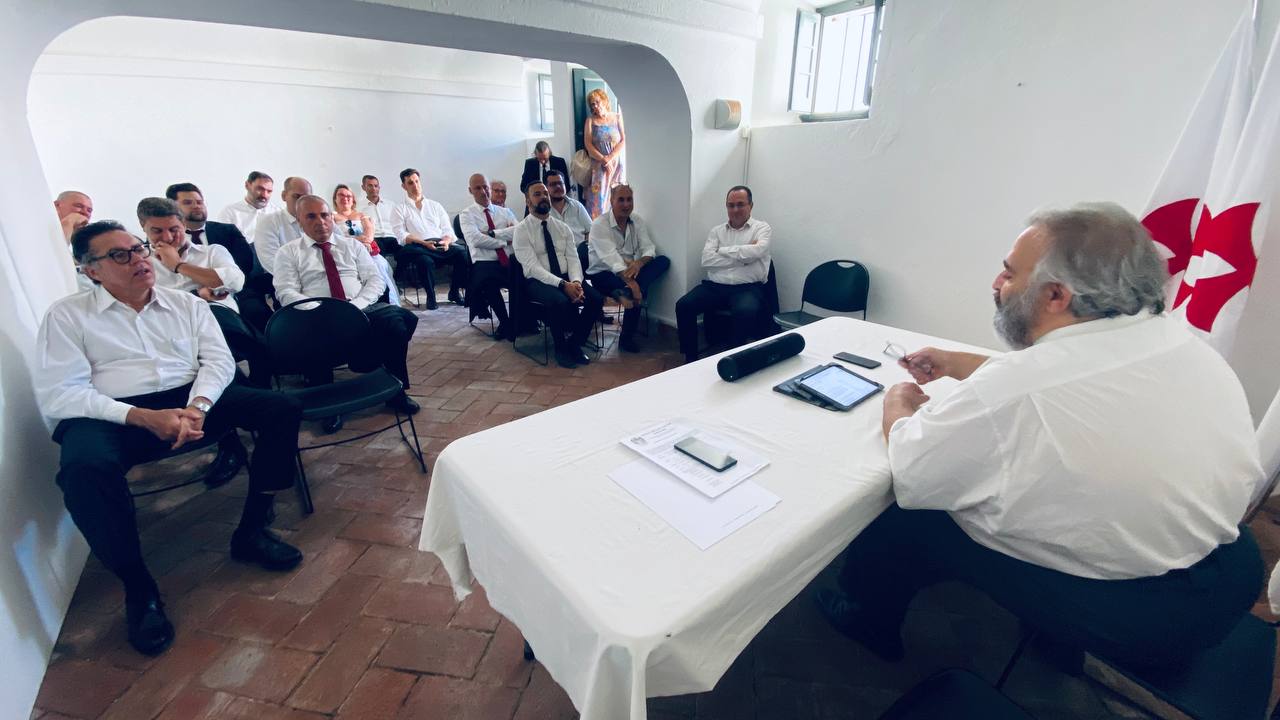
In the afternoon the new Candidates to the Order gathered at the Fortress for the final training and orientation session. Presided over by Grand Prior F+ Luis de Matos, the letter that had been sent to the Candidates a few days before was read and explained in detail. Everyone had the opportunity to clear all doubts on the historical and philosophical tenets of the Order. Questions about the organization, formality and structure were also addressed.
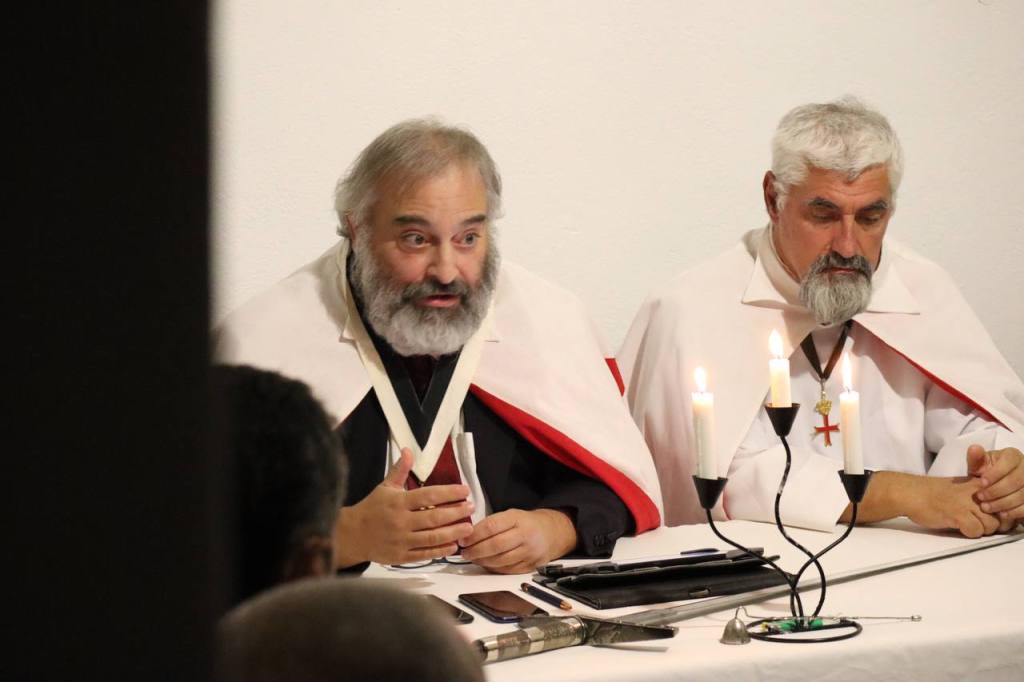
After a short recess for refreshments, a discussion on the role of the Order, today, took place. History and the past tense is usually the frame of reference for the Templars, however the OSMTHU, acknowledging the past, always moves the discussion to the present and tries to anticipate the future. Practice makes perfection. A Knight truly emerges in the real world, out of practice and action. It’s not a matter of speculation, phantasy or role playing.
Dinner took place in the Refectory of the Portuguese Army in Lagos, in a spartan environment intended to prepare the Candidates to the poor life in a Order that defined itself as the Poor Knights of Christ.
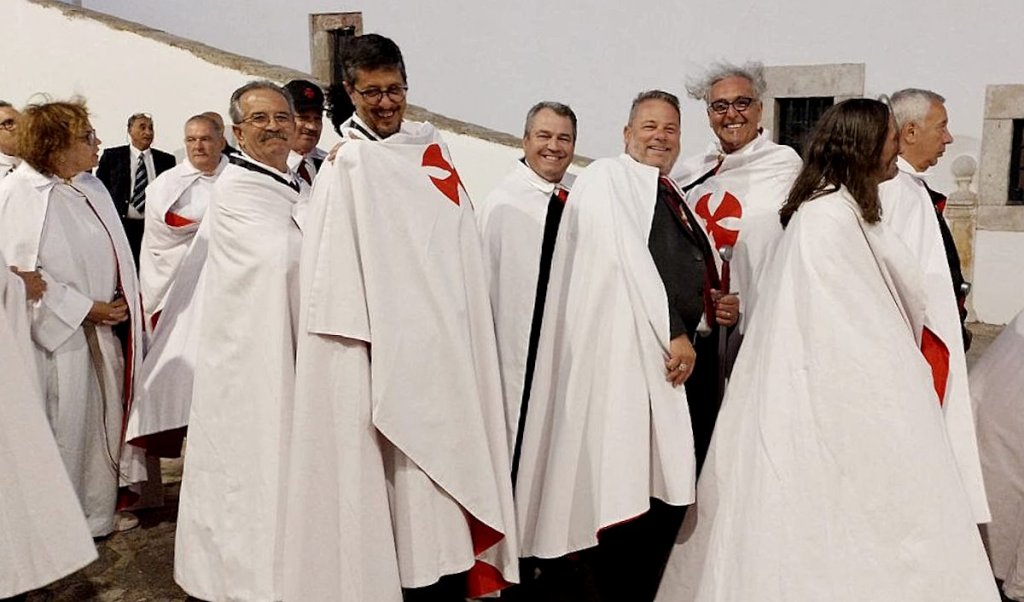
As night fell, Brothers and Sisters of the OSMTHU, Candidates and invited guests, including family, gathered in one of the largest vaulted rooms of the Fortress. The turnout was so large that last moment arrangements had to be made to accommodate everyone.
Local Lagos authorities were represented by Drª Helena Moran, Archeologist of the Mayor’s Office and Director of the Municipal Museum of Lagos, that includes jurisdiction of the Forte da Ponta da Bandeira. Commander Fernandes da Palma, Port Captain of Lagos was also present.
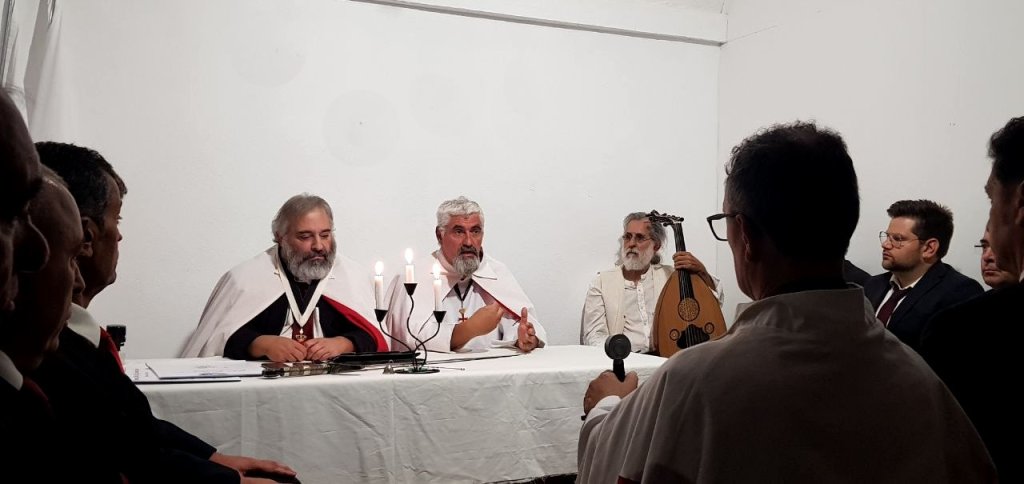
The ceremony was opened by the Grand Prior with the assistance of Fr+ Paulo Valente, KGCTJ, Commander of Sintra and Fr+ Victor Varela Martins, KGCTJ, Commander of Laccobriga. Fr+ Valente gave a short speech about the solemn moment that was about to be enacted.
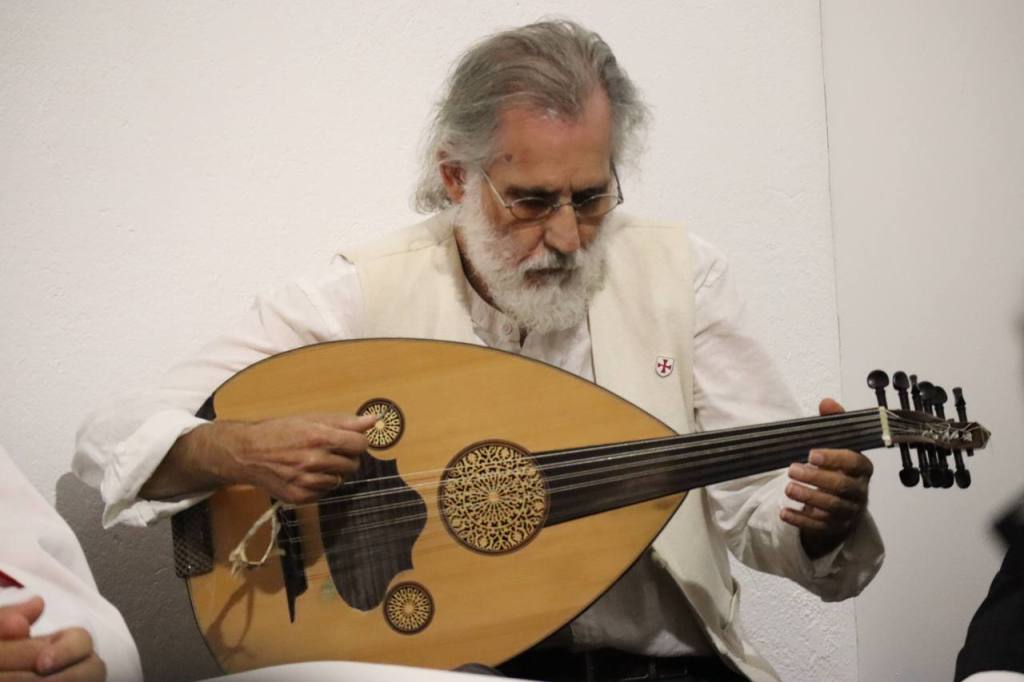
The Grand Prior invited everyone to enjoy a moment of introspection while lute player, and long time collaborator of the Order, Eduardo Ramos masterfully execute a few beautiful songs that transported everyone to a holy place, out of time and space. The Grand Prior said that Templar ships sailing from Lisbon, and later from Lagos, heading to the Holy Land, taking the rout of Gibraltar and Northern Africa, would have musicians on board as a way to engage in dialogue with populations on their way. When they disembarked on the shores of Tripoli in search of water and provisions, music would be their first connection. The lute was known and played by Christians and Muslims. Melodies were exchanged and harmonies achieved. Then came language. And only then commerce. And off to Cairo, with the lute on their shoulders.
Then the Grand Prior gave a final explanation about the degrees of the Order and how they are structured, describing in detail what the accolade, or “armament” (to give arms), its context in medieval history and modern validity and equivalent.
Each of the Candidates, one by one, came to the altar and proceeded to read out loud the Commitment of the Order.
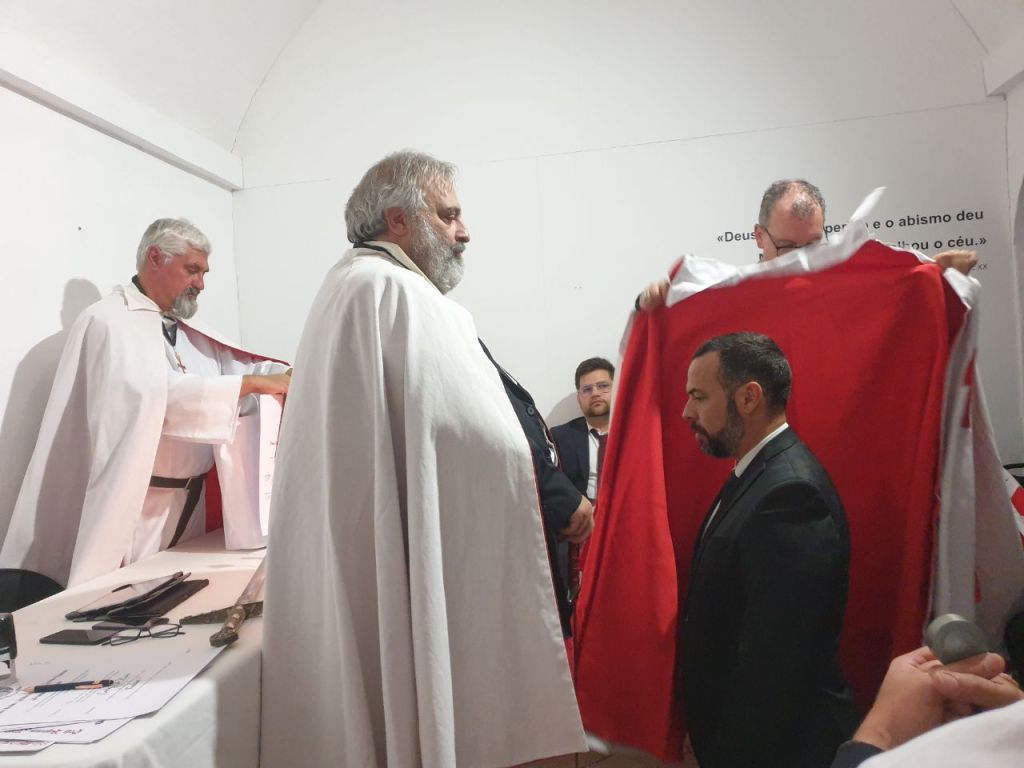
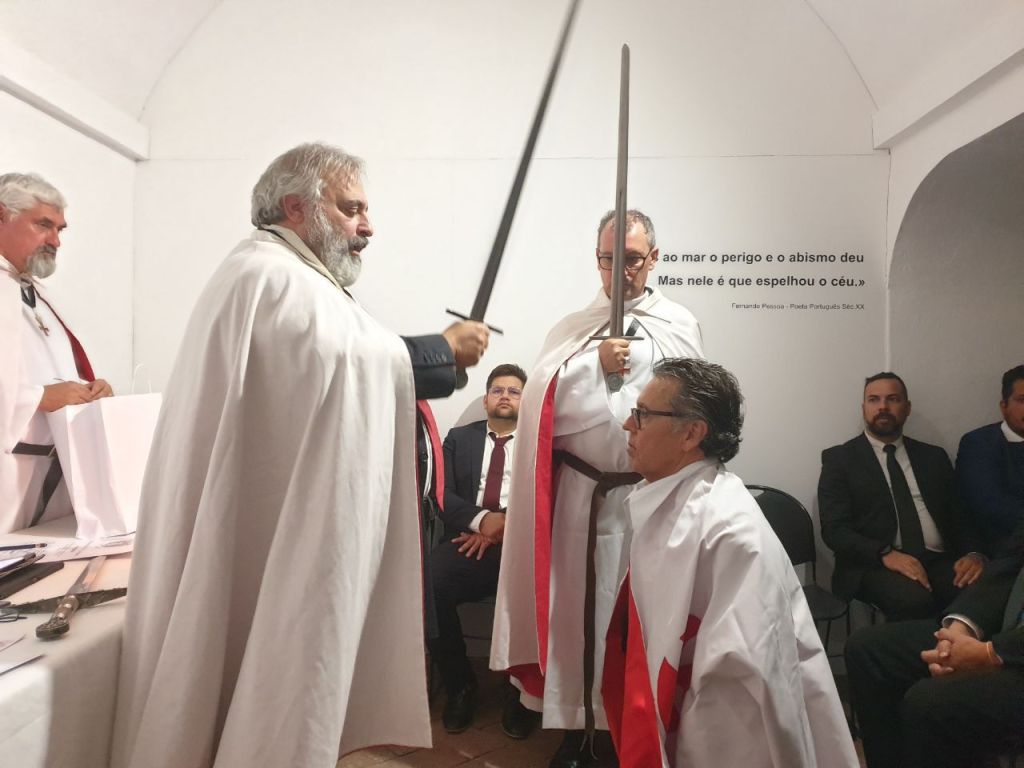
Then the Master of Ceremonies brough the Candidates, again one by one, to the center, in front of the altar, where they were kneeled. They were covered with the mantle of the Order and then armed by the Grand Prior in the traditional manner, using the traditional forms and words. This having been done, the new Knight rose and was decorated with the Templar Cross, given his certificate, the Liber Novitius published by the Preceptory of the Order, where all the information that had been part of the training stage, is now accessible in written form, and welcomed into the Order with a fraternal embrace.
After the completion of the ritual for each and everyone of the Candidates, the Grand Prior revealed the powerful and deep symbolism that is the basis for every gesture and word of that simple, but meaningful liturgy. He also told the new Knights that they hadn’t arrived, rather they were only starting their journey. He invited them all to study further to fully become a Knight of the Temple, with the completion of the armament with the vigil and reception in the House of the Temple.
“The traces of the Templars are still there. Today we go to Tomar, Almourol, Pombal and many other Templar places and admire their legacy in architecture and art”, said the Grand Prior; “Chesterton wondered why the derelict neighborhoods of London were not as beautiful as Florence”, he proceeded; “His realization was interesting, he said nobody loved the derelict neighborhoods of London, but someone loved Florence, as if anyone had loved the derelict neighborhoods of London the way Florence was loved, the derelict neighborhoods of London would become Florence! That is the power of love. The Templars transformed every place where they happened to pass. We now go after their steps, we look for Templar places, to witness their every trace, a Templar Cross on a slab of stone, a small Templar church, a mighty Templar Castle. The legacy. It’s your turn now. Go and love the derelict neighborhoods you may come across, like a Templar. Turn them into Florence. Leave a trace of your love. Transform the world around you and make it a better place because you have been there. Be the cause of love in others so that the next generations come after you and say of your work: here stood a Templar! Leave your mark so that the can say: I’m now inspired to follow on these steps.”
Before closing, Fr+ Jorinho Manuel was remembered. He passed on to the House of the Father after a long struggle with cancer. The Non Nobis of the day was sung on his homage. The night ended with everyone enjoying the sweet fruits of fraternal love. An overwhelming joy was felt by the Knights, guests and families. Many decided to extend the night in celebration, walking the promenade alongside the river of Lagos in groups, or taking a few drinks with the new found brothers on the many pubs that were still opened. Others returned to their homes, driving a few hundred miles, or their hotels just nearby.
In common the same sense of fulfilment and joyful bliss.
Welcome to the Templar Order my Brothers. Now it’s time to work.
[EM PORTUGUÊS]
Um dia de celebração da Cavalaria verdadeiramente admirável teve lugar este fim-de-semana em Lagos, Portugal, onde as fileiras do Templo Secular, sob a OSMTHU, continuam a crescer e a fortalecer-se, dando vida a uma visão contemporânea e única do Templarismo, firmemente enraizada na tradição do passado, de valores imutáveis, mas com os olhos voltados para o futuro sem precisar de pedir desculpas.
As actividades do fim de semana decorreram no histórico Forte da Ponta da Bandeira, vigilante sobre o porto de Lagos, assentado no local estratégico onde as Caravelas do Infante D. Henrique se lançaram ao mar em busca do Prestes João e de um mundo de perigos e medos ainda desconhecidos.
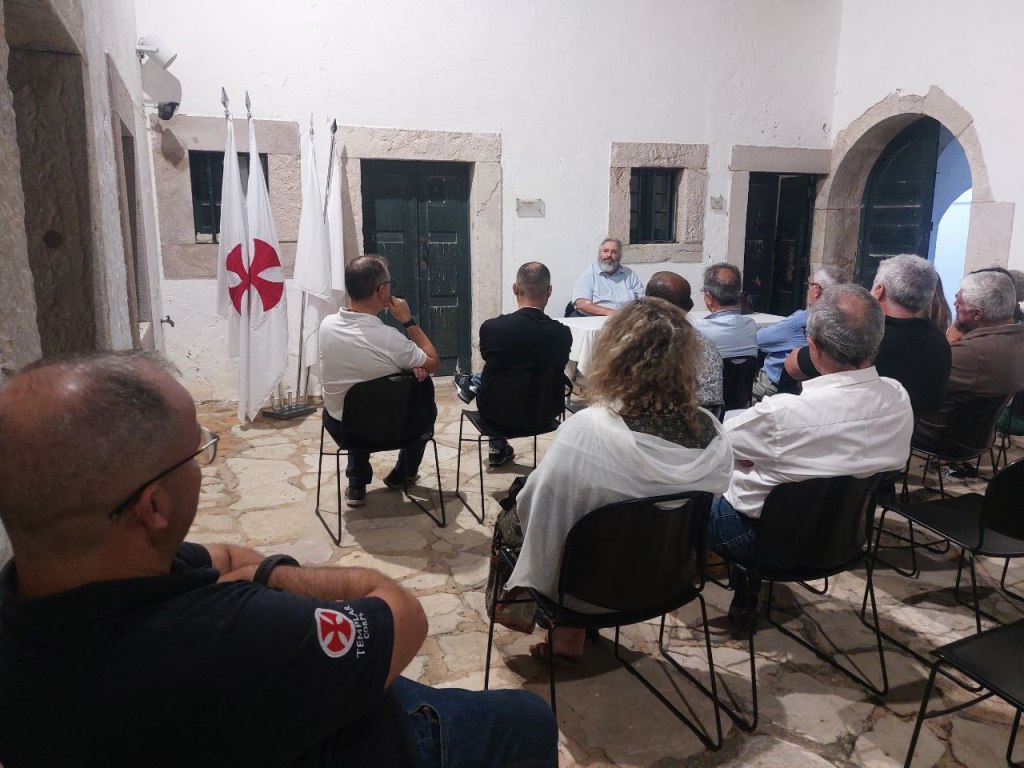
Na sexta-feira, o F. Luís de Matos, Grão-Prior de Portugal e Chanceler do Conselho Magistral da OSMTHU sob a regência do Mestre António Paris, em Conferência deu um longo e detalhado olhar sobre a História Templária, comparando-a com os vários estados da matéria dos elementos gregos clássicos, desde a fase da Terra densa, quando a Ordem acumulou territórios e terras, à fase das Águas com a formação da Frota Templária, às fases do Ar e do Fogo com a prisão do Mestre em Paris e o martírio de Março de 1314 pelo fogo. Paralelamente, foi também recordada a História de Portugal, com um ciclo semelhante, fortemente influenciado pela Ordem do Templo durante a fase da Terra de consolidação do território português e a fase da Água com os Descobrimentos, lançados pela Ordem de Cristo. O Fr+ Matos traçou analogias e comparações surpreendentes, avançando para uma inevitável progressão em que Ordem e Nação partilham um Destino comum. A discussão que se seguiu foi fascinante, com um público participante e envolvido de uma forma muito esclarecedora e entusiasta.
O programa para o dia seguinte teve que ser alterado devido a circunstâncias imprevistas. O Presidente da Câmara Municipal de Lagos presidia à Cerimónia de Formatura da Classe do Corpo Templário de Socorristas e Apoio Florestal e Urbano. No entanto a Protecção Civil portuguesa activou o Nível Delta da Directiva Operacional Nacional de Prevenção de Incêndios Rurais no dia 30 de Junho, convocando activamente todos os formandos do Templar Corps disponíveis, que se encontram nos seus postos ao serviço da Autoridade Nacional, prontos a entrar em acção. A época de incêndios rurais e florestais de 2023 teme-se ser a mais perigosa dos últimos anos devido à forte seca que afecta o país e em particular a região do Algarve, onde se situa a sede do Corpo Templário. A cerimónia acontecerá no final de Outubro.
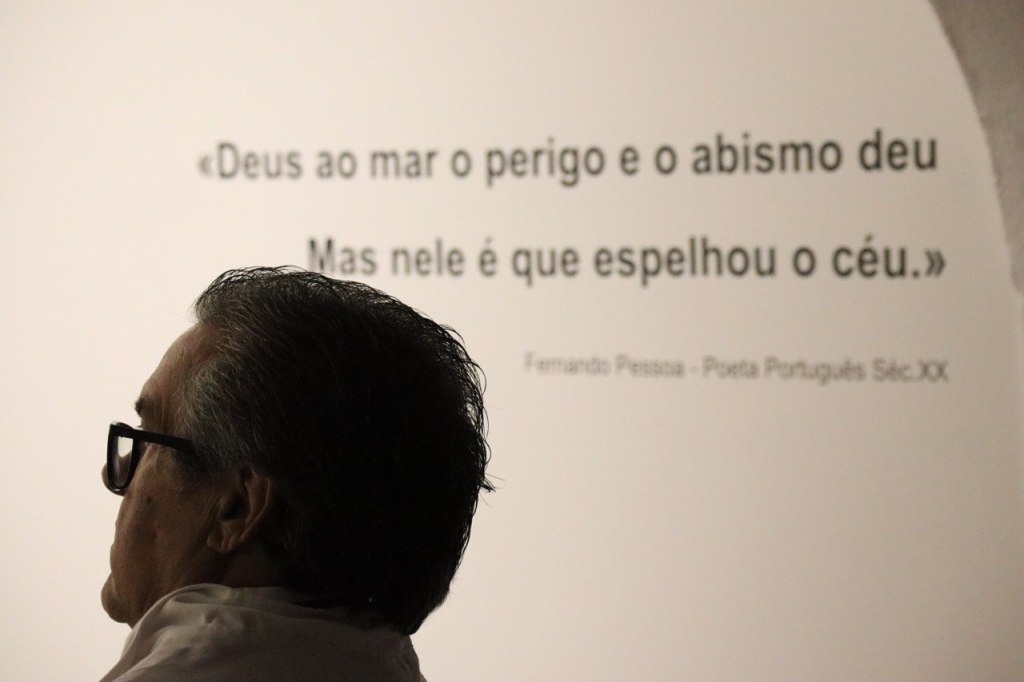
À tarde, os novos Candidatos à Ordem reuniram-se na Fortaleza para a sessão final de formação e orientação. Presidida pelo Grão-Prior F+ Luís de Matos, foi lida e detalhadamente explicada a carta enviada aos Candidatos dias antes. Todos tiveram a oportunidade de tirar as suas dúvidas sobre os temas históricos e filosóficos da Ordem. Questões sobre organização, formalidade e estrutura também foram abordadas.
Após um breve intervalo para descanso, passou-se a uma discussão sobre o papel da Ordem hoje. A história e o passado são geralmente o quadro de referência para os Templários, no entanto, a OSMTHU, reconhecendo o passado, procura trazer a discussão para o presente e tenta antecipar o futuro. A prática traz a perfeição. Um Cavaleiro real surge no mundo real, da prática e da acção. Não é uma questão de especulação, fantasia ou role-playing.
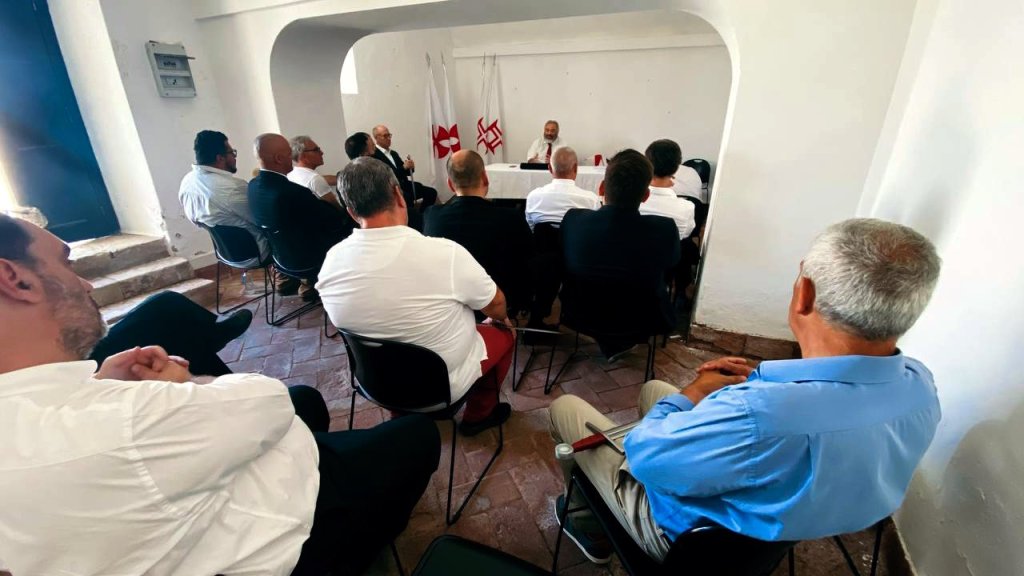
O jantar decorreu no Refeitório do Exército Português em Lagos, num ambiente espartano destinado a preparar os Candidatos para a vida pobre numa Ordem que se definia como os Pobres Cavaleiros de Cristo.
Ao cair da noite, irmãos e irmãs da OSMTHU, candidatos e convidados, incluindo familiares, reuniram-se numa das maiores salas abobadadas da Fortaleza. A afluência foi tão grande que arranjos de última hora tiveram que ser feitos para acomodar todos.
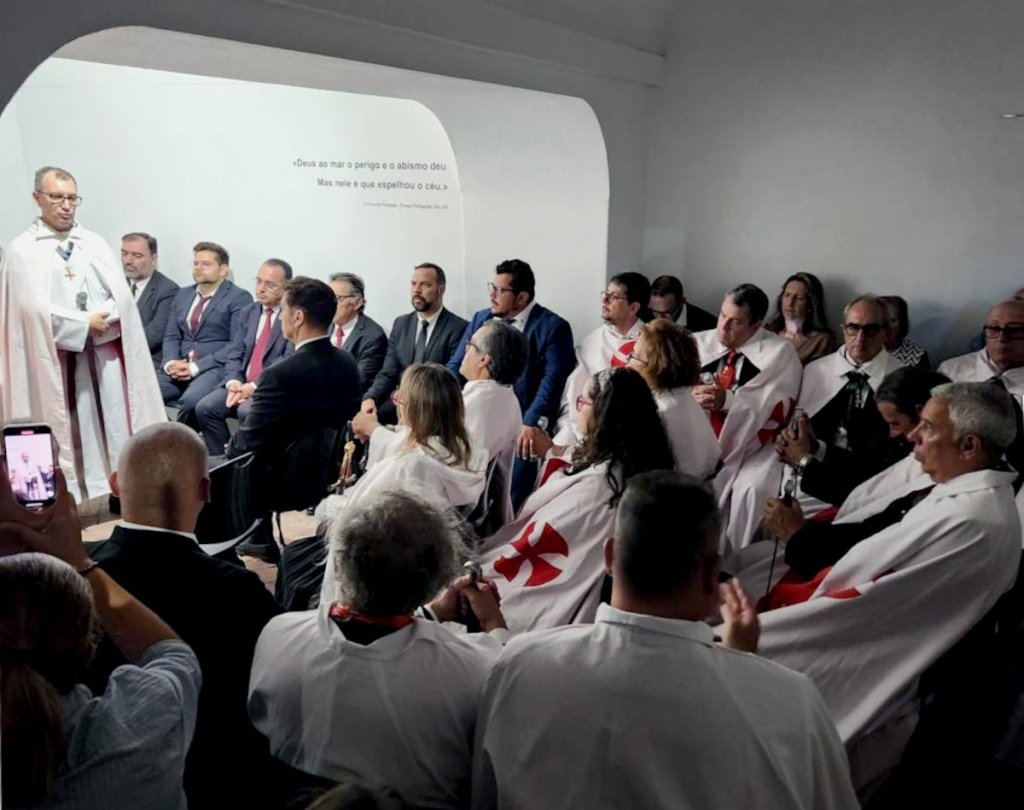
As autoridades locais de Lagos estiveram representadas pela Drª Helena Moran, Arqueóloga da Câmara Municipal e Directora do Museu Municipal de Lagos, que inclui jurisdição do Forte da Ponta da Bandeira. Também esteve presente o Comandante Fernandes da Palma, Capitão do Porto de Lagos.
A cerimónia foi aberta pelo Grão Prior com a assistência do F+ Paulo Valente, KGCTJ, Comendador de Sintra e do F+ Victor Varela Martins, KGCTJ, Comandante de Laccobriga. O F+ Valente fez um breve discurso sobre o momento solene que estava para acontecer.
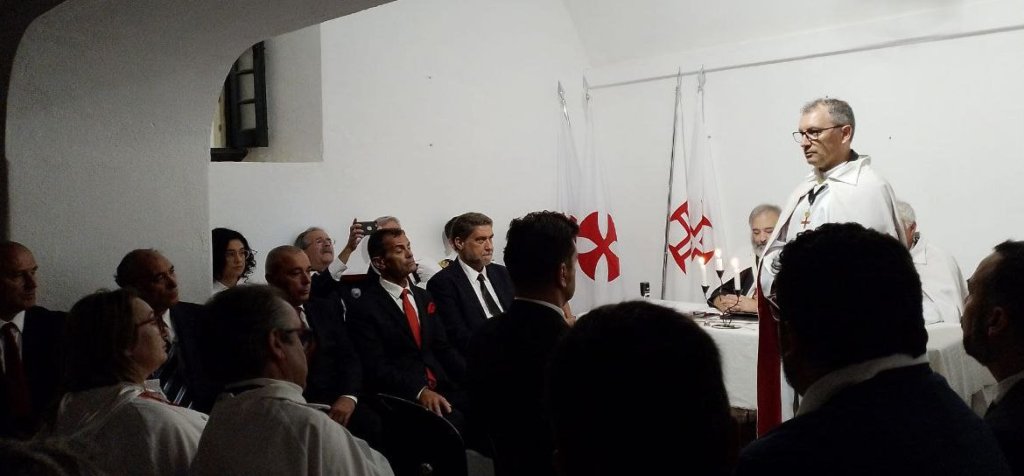
O Grão Prior convidou todos a desfrutar de um momento de introspecção enquanto o músico, e de longa data colaborador da Ordem, Eduardo Ramos, executou com maestria algumas belas canções no alaúde tradicional, que transportaram todos os presentes para um lugar sagrado, fora do tempo e do espaço. O Grão-Prior disse que os navios Templários que partiam de Lisboa, e depois de Lagos, com destino à Terra Santa, fazendo a rota de Gibraltar e do Norte de África, teriam músicos a bordo como forma de dialogar com as populações no caminho. Quando desembarcavam na costa de Trípoli em busca de água e mantimentos, a música era o primeiro contacto de culturas. O alaúde era conhecido e tocado por cristãos e muçulmanos. Naquele tempo, melodias foram trocadas e harmonias alcançadas. Depois veio a lingua. E só então o comércio. E depois, vamos de saída para o Cairo, com o alaúde aos ombros.
Em seguida, o Grão Prior deu uma explicação final sobre os graus da Ordem e como eles são estruturados, descrevendo detalhadamente o que é a armação (de “dar armas”), o seu contexto na história medieval e a sua validade e equivalência moderna.
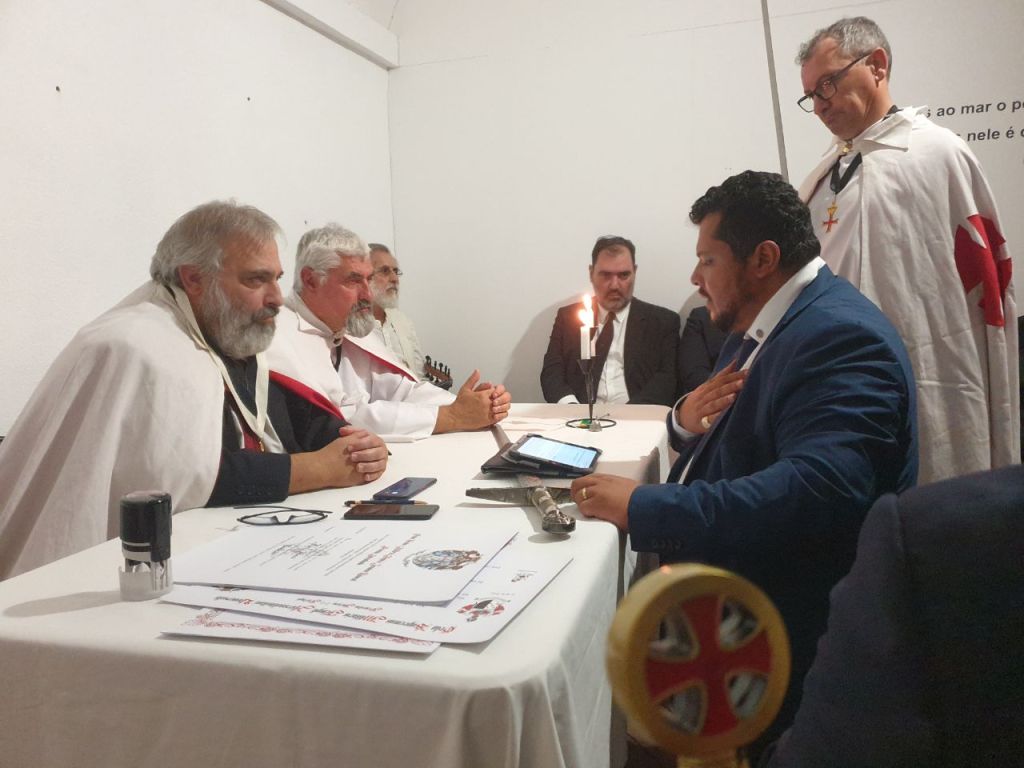
Os Candidatos, um a um, aproximou-se do altar e procedeu à leitura em voz alta do Compromisso da Ordem.
De seguida, o Mestre de Cerimónias trouxe os Candidatos, novamente um a um, para o centro, em frente ao altar, onde foram ajoelhados. Foram então cobertos com o manto da Ordem e depois armados pelo Grão Prior da maneira tradicional, usando as formas e palavras tradicionais. Feito isto, o novo Cavaleiro ergueu-se e foi condecorado com a cruz Templária, tendo-lhe sido conferido o seu certificado, o Liber Novitius publicado pela Preceptoria da Ordem, onde todas as informações que fizeram parte da fase formativa estão agora acessíveis em forma escrita, e acolhido na Ordem com um abraço fraterno.
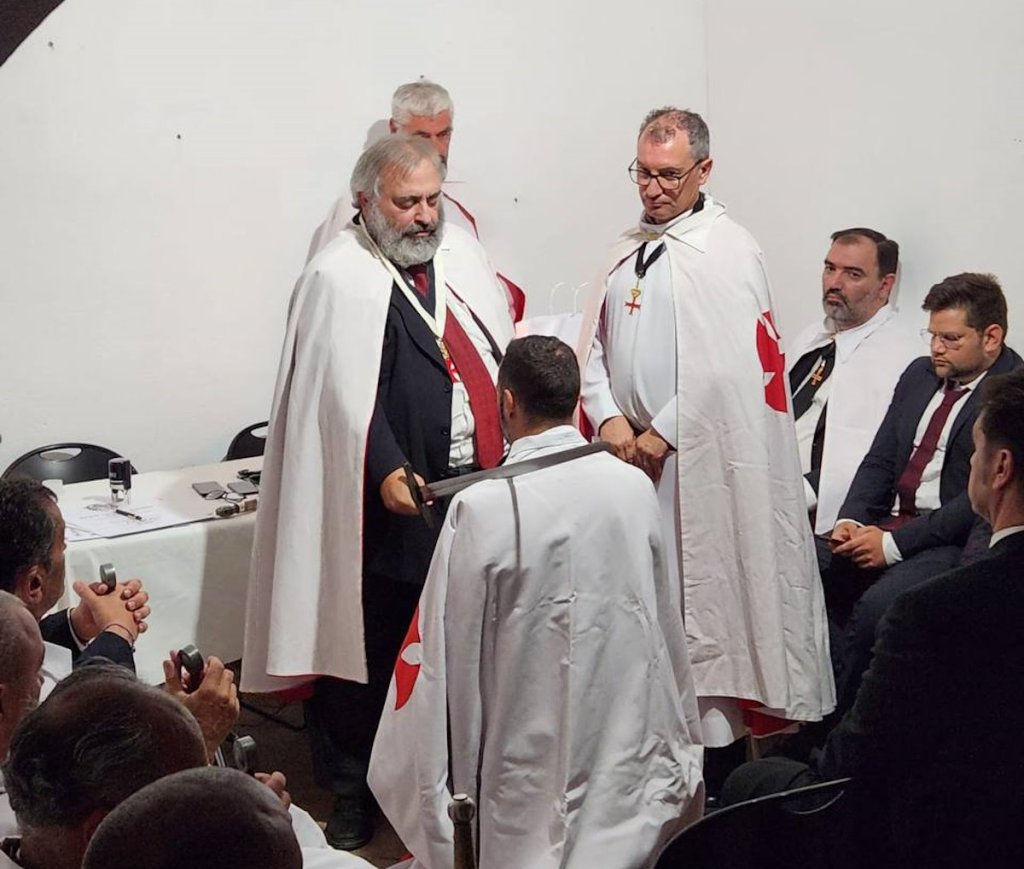
Após a conclusão do ritual para todos e cada um dos Candidatos, o Grão-Prior revelou o poderoso e profundo simbolismo que está na base de cada gesto e palavra desta liturgia simples, mas significativa. Disse ainda aos novos Cavaleiros que eles não haviam chegado ou cortado uma meta, mas que estavam apenas a começar a jornada. Convidou todos a estudarem mais para se tornarem plenamente Cavaleiros do Templo, com a conclusão do armamento com a vigília e recepção na Casa do Templo.
“Os vestígios dos Templários ainda existem. Hoje vamos a Tomar, Almourol, Pombal e muitos outros lugares templários para admirar o seu legado na arquitectura e na arte”, disse o Grão-Prior; “Chesterton perguntou-se por que os bairros degradados de Londres não eram tão belos como Florença”, prosseguiu; “A sua explicação é interessante, ele disse que ninguém amou os bairros degradados de Londres, mas alguém amou Florença, porque se alguém tivesse amado os bairros degradados de Londres como Florença foi amada, os bairros degradados de Londres tornavam-se Florença! Esse é o poder do amor. Os Templários transformaram todos os lugares por onde passaram. Agora seguimos os seus passos, procuramos os lugares dos Templários, para testemunhar todos os seus vestígios. Uma cruz Templária numa laje de pedra, uma pequena igreja Templária, um poderoso Castelo da Ordem. É o seu legado. Agora é a vossa vez. Vão e amem os bairros degradados que possam encontrar, amem como um Templário. Transformem-nos em Florenças. Deixem um rasto vivo do vosso amor. Transformem o mundo ao vosso redor e tornem-no num lugar melhor porque por lá passaram. Sejam a causa do amor nos outros para que as próximas gerações, que venham depois de vós, digam do vosso trabalho: aqui esteve um Templário! Deixem a vossa marca para que possam dizer, inspirados: quero seguir seguir estes passos.”
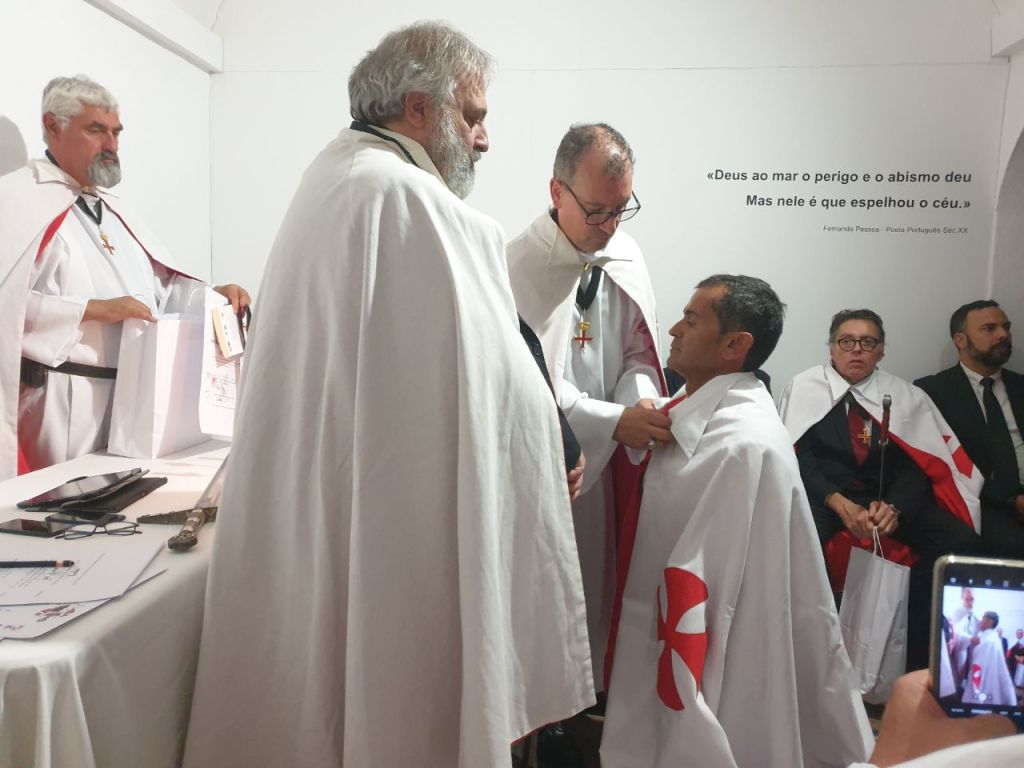
Antes de encerrar, o F+ Jorinho Manuel foi lembrado. Regressou à Casa do Pai depois de uma longa luta contra o cancro. O Non Nobis foi cantado em sua homenagem. A noite terminou com todos saboreando os doces frutos do amor fraterno. Uma alegria imensa sentia-se no ar, partilhada por Cavaleiros, convidados e familiares. Muitos decidiram prolongar a noite em festa, passeando em grupos pelo passeio ribeirinho de Lagos, ou tomando uns copos com os novos irmãos nos muitos pubs que ainda estavam abertos. Outros voltaram para suas casas, fazendo algumas centenas de quilómetros ou regressando aos seus hotéis nas proximidades.
Em comum, a mesma sensação de realização, felicidade e alegria.
Bem-vindos à Ordem do Templo, meus irmãos. Agora é hora de trabalhar.
Grand Prior of Portugal opens Secular Temple Celebration of the Knight’s Accolade with Conference in Lagos
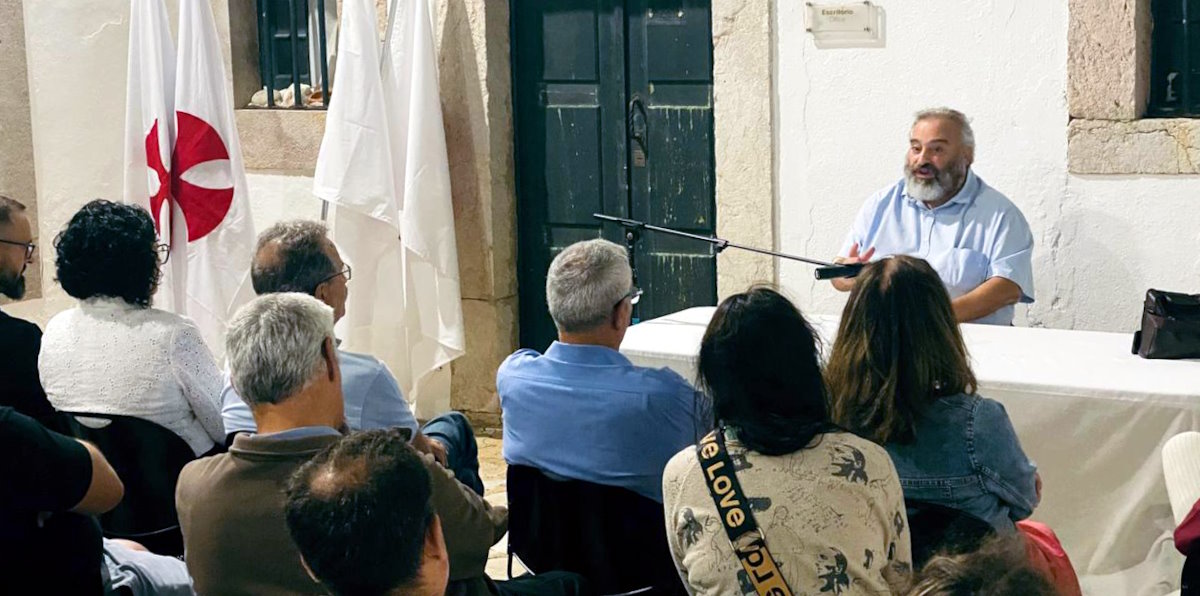
The Secular branch of the OSMTHU gathers this weekend in Lagos, Algarve, Portugal, to celebrate the Templar Kinight’s Accolade and the reception of new Brothers into the Order. The event was opened by the Grand Prior of Portugal OSMTHU, Fr+ Luis de Matos, KGCTJ, with a Conference titled “The Templar Order: Turf, Treason, Mist, Destiny”.
The speaker talked about the Order’s history, comparing it to Portuguese history, highlighting four main stages in a cyclical view that progressed in parallel with the Greek philosophical elements Earth, Water, Air and Fire. The Conference was well attended and generated an interesting and long debate about the Order and how its immortal values keep relevance in a world of technology, tragedy and social media.
OSMTHU joins the Order of the Dragon in celebrating Templar History in Croatia

On the summer solstice of 2023, the Templar Order (Grand Priory of Croatia O.S.M.T.H.U.) and “Fratres Draconic Croatici” joined forces in Zagreb to propagate knowledge of the modern Templar Order and its history.
“Fratres Draconis Croatici” society is a legal successor of the “Order of the Dragon” from 15th century and actively works in Zagreb ever since 16th of November 1905.
Lecture was hosted in Fratres Draconis Croatici headquarters at the Stone Gate, historical place in the very center of Zagreb and moderated by Božo Skoko PhD, a full professor at the Faculty of Political Sciences in Zagreb.
The guests were Grand Prior of Croatia Lovro Tomašinec, Marija Karbić PhD – scientific advisor at the Croatian Institute of History and Damir Karbić – manager of the Departmant of Historical Sciences of HAZU.
History experts Marija and Damir Karbić PhD gave an extensive lecture about history of Templars in Croatia and their influence on Croatian soil, which formerly was a Templar province of Hungaria.

Grand Prior Lovro Tomašinec continued the lecture elaborating the circumstances that led to the fall of Templar Order, their survival in different organisations after “the fall” and finally the rise of a modern Templar Order founded by Fabre-Palaprat in 1804.
This significant cooperation in form of a lecture between two chivalry Orders with extensive and prestigious history, shows us that there is still a need within society to preserve knowledge and valuable teachings of history, carry them on and cherish the values they intend to perpetuate.

Comenda de Laccobriga e Templar Corps em Festa Quinhentista

A Comenda de Laccobriga da OSMTHU e o Outpost do Algarve do Templar Corps International marcaram este ano a sua primeira participação na Festa Quinhentista de Lagos, organizada pela Câmara Municipal de Lagos.
Com base no Forte de Lagos, vigia junto à foz da Ribeira de Bensafrim, um grupo de voluntários recriou uma reunião do Capítulo da Comenda de Lagos da Ordem de Cristo e o seu ambiente, com mobiliário, decoração e figurantes trajados à época. A sala foi igualmente disposta de modo a poder responder às perguntas dos visitantes, dando-lhes uma visão mais detalhada acerca da Ordem de Cristo e da sua herança ancorada no Ordem do Templo. Vários painéis informativos foram colocados nas paredes, traçando a história das Ordens.


Da informação recolhida, todo o numeroso público visitante saiu mais rico e culturalmente mais esclarecido, pois a interacção e a fraternidade manifestada pelos voluntários junto de todo o público nacional e internacional é a clara expressão do motivo que os anima a incentivar estas manifestações. Ao longo dos quatro dias do evento, mais de 2.000 visitantes da Festa Quinhentista se deslocaram ao Forte, \levados pela bandeira da Ordem de Cristo levantada ao vento.

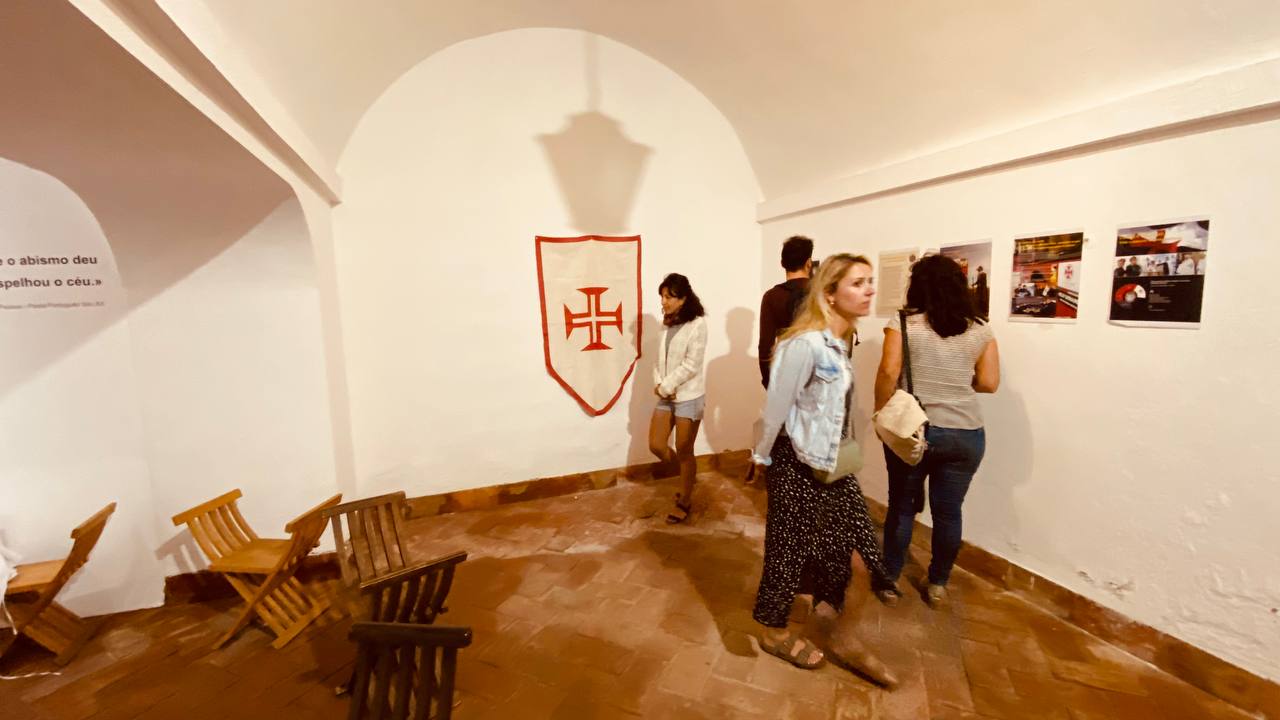
A Comenda de Laccobriga e o Templar Corps International agradecem aos seus Voluntários, à organização do Evento e à Câmara Municipal de Lagos por esta oportunidade tão aliciante. Parabéns aos Lacobrigenses e aos visitantes de terras de perto e de longe pela beleza e qualidade de todos os quatro dias de momentos que nos transportaram até ao Séc.XVI.


Secular Templi visita o país Templário de Almourol e Tomar
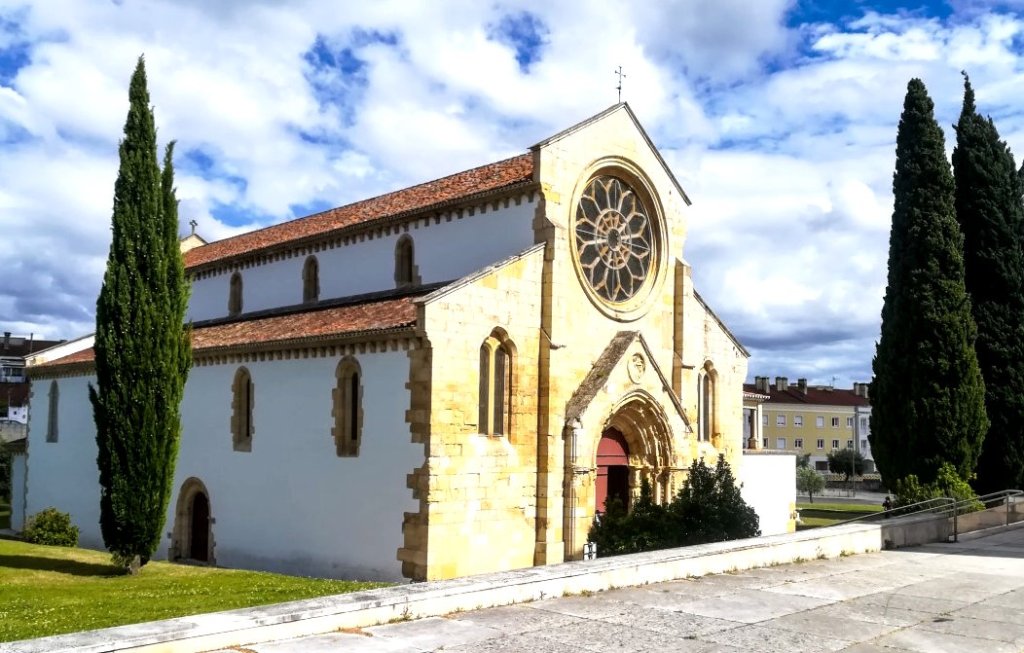
Realizou-se este Domingo, 30 de Abril de 2023, uma visita de estudo dos membros Portugueses da OSMTHU – Secular Templi. Guiada pelo Grão Prior de Portugal e Chanceler da Ordem, F+ Luis de Matos, a visita iniciou-se no Centro de Interpretação Templário de Vila Nova da Barquinha, onde todo o contexto Templário da zona geográfica visitada foi explicado. Além do Centro, obra apoiada pela Ordem e pelo Templar Corps International, procedeu-se a uma curta visita à Biblioteca dedicada ao tema Templário, convidando-se todos os presentes a fazerem doações em valor e em material para poder ampliar este equipamento de referência internacional.

De seguida o numeroso grupo dirigiu-se ao cais de Almourol, onde apanhou a embarcação que o levou à ilha emblemática. O dia estava magnífico, com um glorioso céu azul, sem nuvens e uma temperatura muito agradável.

A escalada é difícil – afinal é um castelo defensivo Templário com centenas de anos! – mas muitos chegaram ao topo da Torre de Menagem de onde se desfruta uma vista impressionante do rio Tejo e das suas margens.
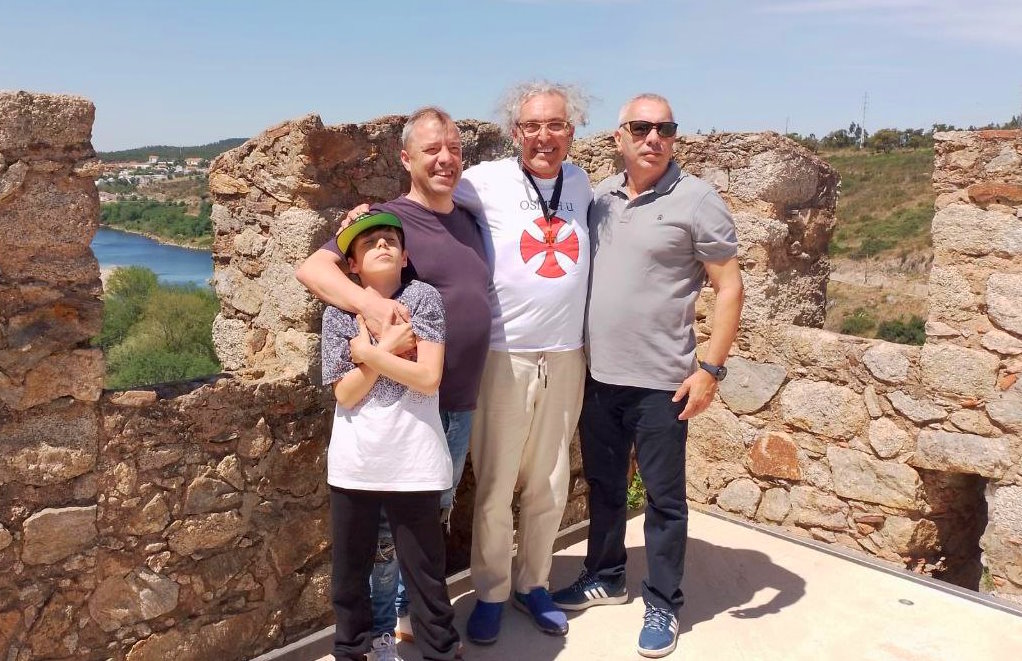
Já na cidade de Tomar o grupo fez uma visita à igreja de São João Baptista, recentemente restaurada, onde alguns dos detalhes mais surpreendentes foram destacados e explicados.

No largo, frente à Câmara Municipal, falou-se um pouco do impressionante percurso de Gualdim Pais, o mais influente e conhecido Mestre do Templo em Portugal, cuja obra inclui a fundação do Castelo de Tomar em 1160 e de Almourol em 1171.

Seguiu-se o almoço, de tom medieval, na Taverna Antiga de Tomar, onde o mais saudável convívio fraternal ajudou a preparar uma tarde de passeio. Dali, o grupo seguiu para a igreja de Santa Maria do Olival, mais um importante marco religioso da presença Templária na região. Assim se concluiu um dia maravilhoso em que a história da Ordem do Templo e a sua memória serviram de inspiração para três dezenas de peregrinos ao país do Templo.
Outras visitas estão em preparação para breve.
Info: templi@seculartempli.org

[ENGLISH]
This Sunday, April 30, 2023, a study visit was organized by the Portuguese members of OSMTHU – Secular Templi. Guided by the Grand Prior of Portugal and Chancellor of the Order, F+ Luis de Matos, the visit began at the Templar Interpretation Center of Vila Nova da Barquinha, where the entire Templar context of the geographical area visited was, explained. In addition to the Center, a work supported by the Order and by the Templar Corps International, a short visit was made to the Library dedicated to the Templar theme, inviting all those present to make donations in value and material in order to expand this equipment of international reference.

Then the large group headed to the Almourol pier, where they borded the boat that took them to the emblematic island. The weather was magnificent, with a glorious blue sky, without clouds and a very pleasant temperature. The climb is tough – it is a Templar defensive castle hundreds of years old after all! – but many reached the top of the Tower from where you can enjoy an impressive view of the Tagus River and its banks.
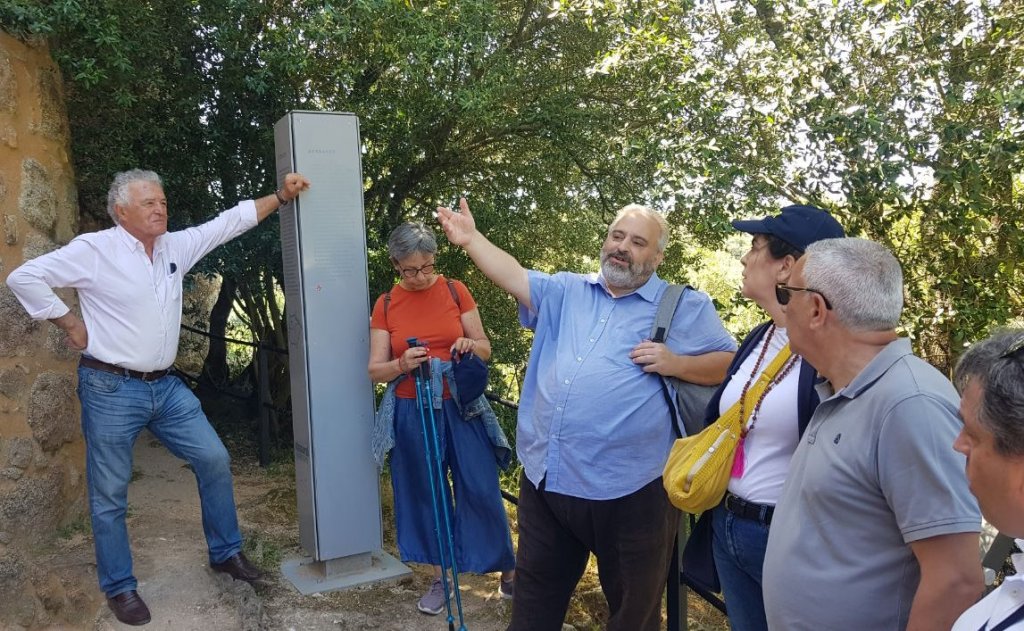
Once in the city of Tomar, the group visited the church of São João Baptista, recently restored, where some of the most surprising details were highlighted and explained. In the square, in front of the Town Hall, the Prior talked about the impressive career of Gualdim Pais, the most influential and well-known Master of the Temple in Portugal, whose work includes the founding of the Castle of Tomar in 1160 and of Almourol in 1171.
This was followed by lunch, in a medieval style, at Taverna Antiga de Tomar, where the healthiest fraternal interaction helped to prepare the afternoon.

From there, the group headed to the church of Santa Maria do Olival, another important religious landmark of the Templar presence in the region. Thus ended a wonderful day in which the history of the Order of the Temple and its memory served as an inspiration for three dozen pilgrims to the country of the Temple.
Other visits are in preparation for the near future.
Info: templi@seculartempli.org
Templar Corps and OSMTHU Commander in Mission to Guiné Bissau

OSMTHU Commander of Arraiolos, Fr+ Rui Herdadinha, has traveled this week to Guine Bissau on personal business but also on an official Templar Corps mission.
Following the success of the Cape Verde mission by Templar Corps Vice-National Commander Portugal Jorge Amador (see more details here and here), the Templar Corps has prepared an ambitious program that aims to deploy equipment, train and certify local first responders, firefighters and paramedics in Portuguese speaking African countries.
“It’s very important that we contribute with this knowledge transfer”, says Commander Herdadinha; “Portugal has a very long and friendly relationship with these young nations, where we find a friend on every corner. For one, the hospitality and kindness of the people of Guine Bissau is unsurpassed. We should do our best to help them develop their skills in every sector. The Templar Corps is especially interested in Humanitarian work.”
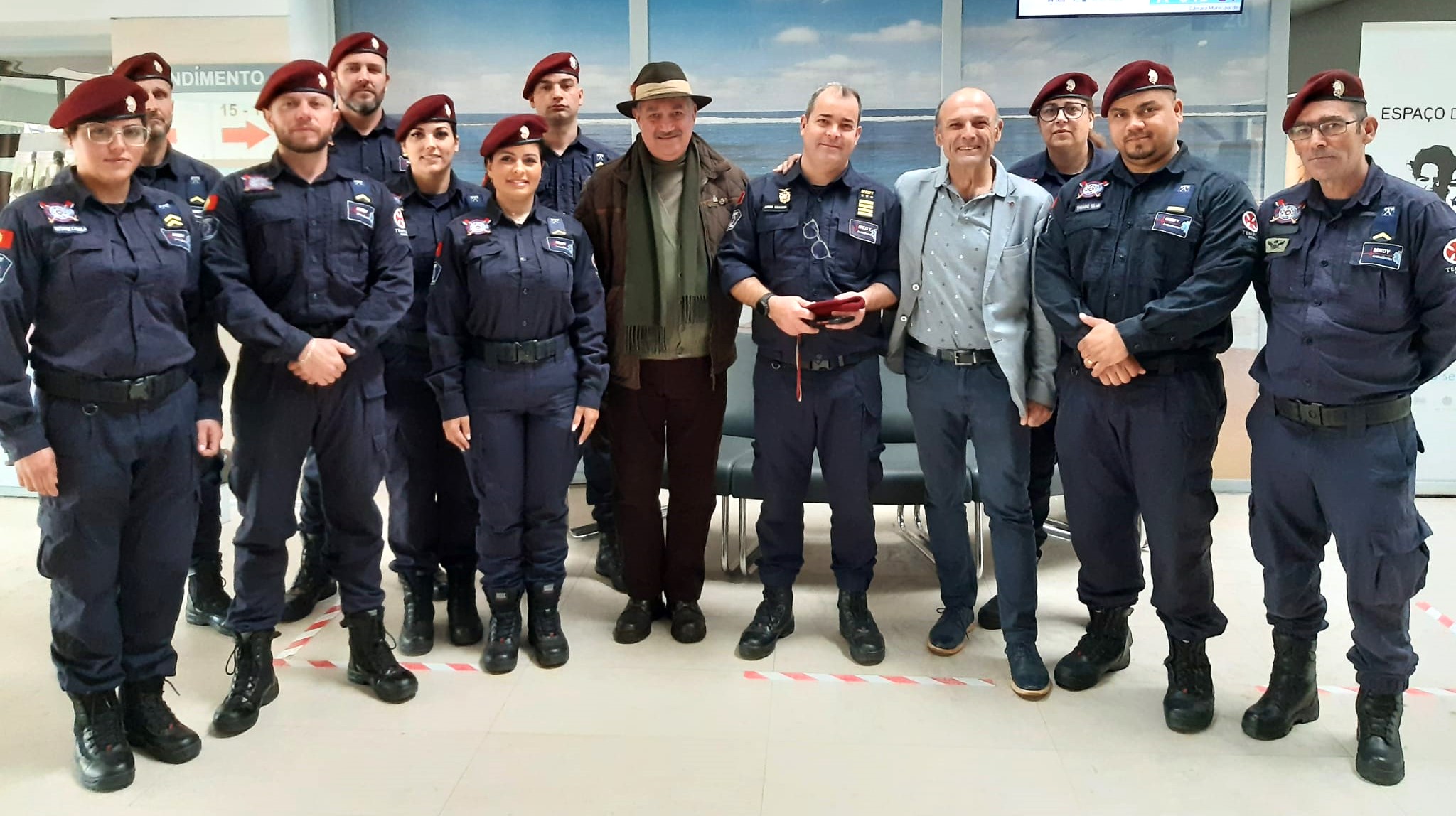
“Our training follows European standards and certifications”, explains Vice-National Commander Amador; “Our aim is to create local teams, ready to respond to crisis situations, be it urban fires, basic life support or natural disasters. The era of big international heavy NGO’s is coming to an end. We need to train smaller teams, give then good equipment and help them to be ready to cope with uncertainty and disaster, because when something extreme happens, they are the first ones on the ground. Always”.
The Templar Corps International (templarcorps.org) is the largest Humanitarian Organization composed of men and women with an interest in the historical Templar Order and their values of Chivalry and Altruism. It has members in over 25 countries.
Templar Corps Commander Leads Team in Training in Trauma Victim Approach and Basic Life Support in Cape Verde

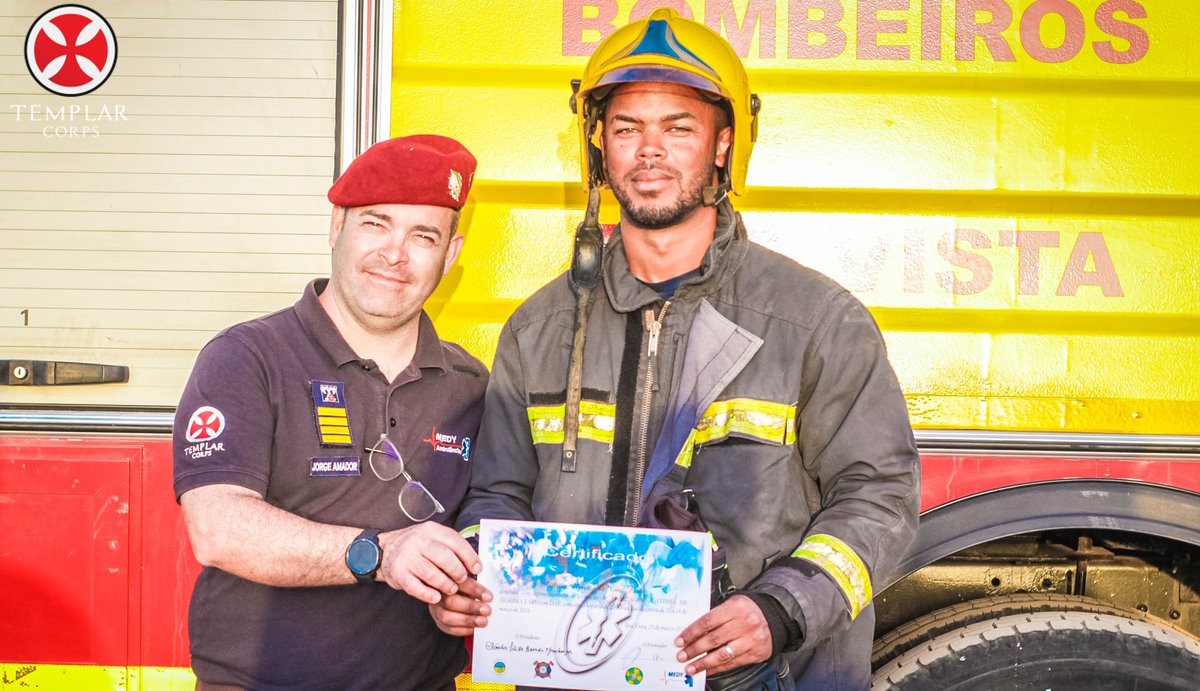
Jorge Amador, Knight Captain and Vice-National Commander Relief/Humanitarian Efforts of the Templar Corps unit from the Algarve, Portugal, lead the team that conducted a one week long Training program for the Boa Vista Municipality in Cape Verde.
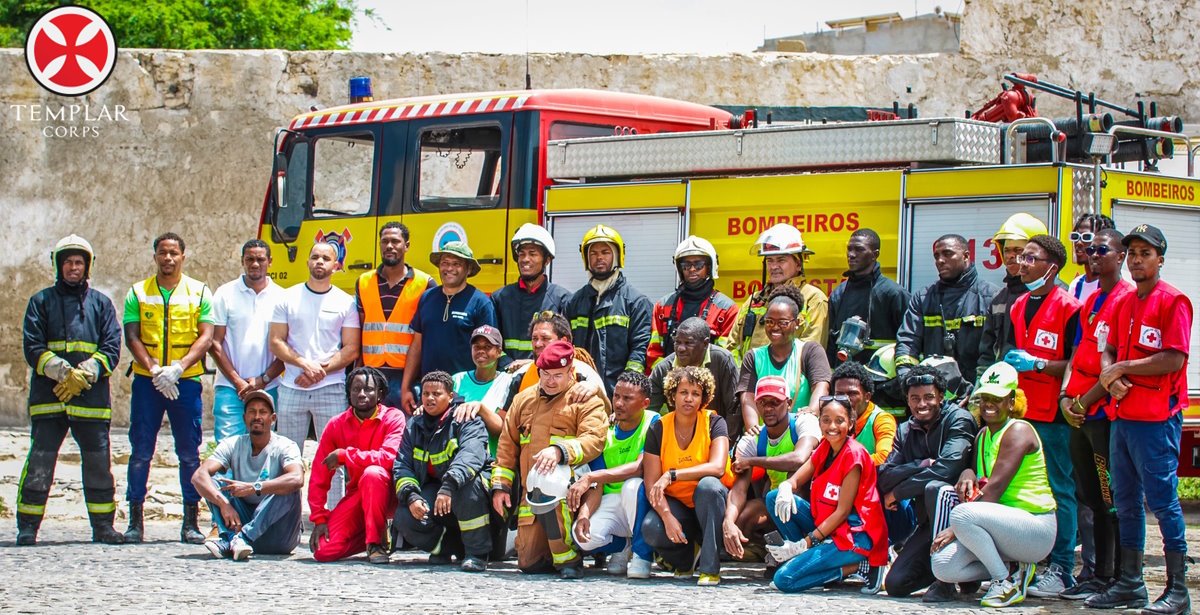
A total of 27 trainees, including Municipal Firefighters, Red Cross and volunteers, completed the training in approaching trauma victims and basic life support with AED (Automated External Defibrillator) in the city of Sal-Rei.
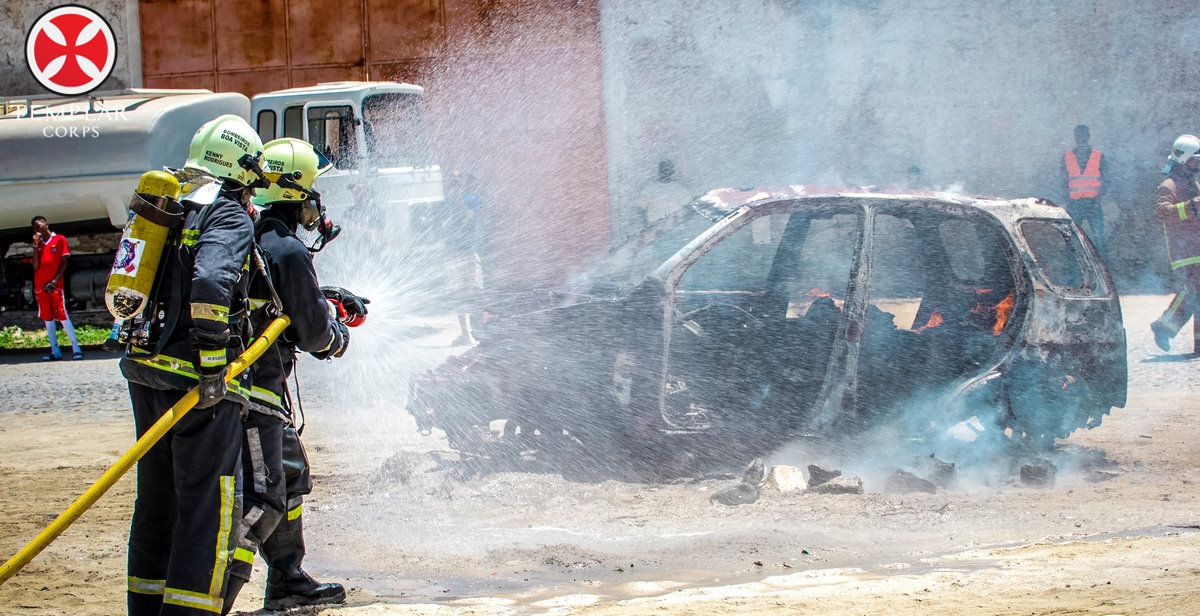


The training took place between the 21st and 24th of March and was given by Jorge Amador from “Medy Ambulâncias” and Vice-National Commander Relief/Humanitarian Efforts of the Templar Corps, and Vitor Brito, Fire Chief of Montijo, Portugal.


“We are now more capable”, said Danilson Gonçalves, responsible for the Municipal Firefighters, referring to the importance of training to acquire more knowledge and be better prepared to serve the population.

The Councilor for Civil Protection of the Boa Vista City Council, João Mendes, highlighted that the training will allow firefighters to be better prepared for emergencies, while the municipality will continue to reinforce the capacity of firefighters to intervene and provide conditions to respond to situations of emergency.

Templar Corps in Prime Minister Audience

During his official March 2022 visit to Lisbon, Portugal, His Excellency Jorge Bom Jesus, Prime Minister of São Tomé e Príncipe, met in audience with Frei Fernando Ventura (Franciscan Capuchin friar) and a delegation of the Templar Corps International with TCI lawyer Marcelo Katter and TCI CEO Luis de Matos.
São Tomé e Príncipe is is an island country in the Gulf of Guinea, off the western equatorial coast of Central Africa. It consists of two archipelagos around the two main islands of São Tomé and Príncipe. In the past few years, the economy of São Tomé and Príncipe has grown, driven by agriculture, tourism and foreign investments. São Tomé and Príncipe outperforms the sub-Saharan Africa average on the Human Development Index and has made great progress on most social indicators. All children in São Tomé and Príncipe are enrolled in the education system, life expectancy has increased to 70 years, the infant mortality rate has decreased dramatically and the vast majority of the population already has access to piped water and access to electricity. The Island of Príncipe is part of the UNESCO World Network of Biosphere Reserve since 2012, a prime eco-tourism destination.
Frei Ventura has spearheaded a few Humanitarian Projects in São Tomé e Príncipe in the last decade, with a significant impact on the local community. The Templar Corps International has been advocating for these projects, listing them as a priority and helping to gather resources and volunteers. The Banco de Leite (Milk Bank) has been helping young mothers who have difficulties to feed their young children in the earliest and important months of their lives. Casa Betânia [link in Portuguese], a home for the elderly, is another important project that is in the final stages of raising funds. Other projects are in early stages of development.
During the meeting the Prime Minister was informed about each of the ongoing projects and plans for 2022. These include areas such as heath care and fire prevention, with the donation of fully equipped medical vehicles, medicines, training and certification to be provided by the Templar Corps International unit of the Algarve, Portugal.
Frei Fernando Ventura was the Invited Speaker of the Global Forum of the Templar Corps titled “Poverty in Africa – The numbers, the action”.
Projecto Radio-Amador do Diploma Castelos Templários Portugueses completa 5 anos

Parabéns à equipa de gestão do Projecto. São cinco anos a realizar uma caminhada de divulgação do legado material Templário através das comunicações de Amador.
O DIPLOMA DOS CASTELOS TEMPLÁRIOS PORTUGUESES nasceu do desejo de Rádio-Amadores portugueses darem a conhecer o belo e inestimável património, o legado que a Ordem do Templo edificou no medievo e que chegou até nós. Um projecto para os Amadores da rádio de todo o mundo. Desde a primeira hora contou com o apoio do Grão Priorado de Portugal da OSMTHU.
A aceitação tem sido fantástica ao longo destes cinco anos, tanta que este grupo tem um elevadíssimo número de seguidores que nada conhecem de rádio, nunca usaram ou viram um emissor mas que nutrem um gosto e interesse genuíno pela herança recebida dos nossos antepassados medievais. Que as comunicações sejam sempre fluídas e que sejam lançadas pontes electromagnéticas entre os Homens de boa-vontade de todos os quadrantes, de todas as crenças e ideologias, como o Rádio-Amadorismo sempre e bem sabe promover!
Contamos convosco no Diploma para continuarem a ajudar a divulgar este ideal de Cavalaria. Parabéns pela obra feita!!!
Feliz dia para Todos os membros Amadores e não Amadores. Boas comunicações.
E que o vosso entusiasmo e capacidade seja um exemplo daquilo que tem de ser, toda a acção motivada pela Ordem e com o fim de que tudo se submete ao Altíssimo.
Todas as reações:
9Tu e 8 outras pessoas
DECLARATION OF THE CHANCELLERY OF THE OSMTHU REGARDING THE OSMTJ CONCLAVE OF TOMAR AND THE ASSAULT ON THE PORTUGUESE GP BY THE GM
Lisbon, September 24, 2023
The Magisterial Council of the Ordo Supremus Militaris Templi Heirosolimitani Universalis (OSMTHU), through the Office of the Chancellor, declares that the OSMTHU was in no way involved in the serious incidents that took place in the city of Tomar, Portugal, during the International Conclave of the OSMTJ – Martinez Obedience, the 22 and 23 of September 2023. The Templar city of Tomar is held in high esteem by all serious Templar branches and on that same weekend no less than three different independent groups held meetings there. The OSMTHU was invited as guest for the OSMTJ Conclave and took part as an observer in but two meetings on the 22nd., being completely absent during the proceedings of the 23rd of September.
It has come to our knowledge that during a private meeting on the 23rd. of September between Luis Martinez, Master of the OSMTJ – Martinez Obedience and his Grand Prior of Portugal, Sister Alexandra Pissarra – host of the Conclave – there was an altercation between the two and Luis Martinez assaulted Grand Prior Alexandra, pulling her arm, twisting her elbow, and causing a shoulder injury that left her almost unconscious. This unprovoked aggression was witnessed by a member of the Portuguese Grande Priory and a member of the Belgian Grand Priory.
Sister Alexandra Pissarra has a serious medical condition that has accompanied her all her life. She suffers from Double Scoliosis with curvatures, congenital in origin and not operable. She suffers from the risk of falls or any sudden movements that could lead to loss of mobility.
After being treated in her hotel and slowly recovering from the utter shock and injuries – shock that was visible, as Grand Prior Alexandra arrived back at her hotel shaking, crying and in a general state of confusion and disbelief – she was taken to the local police to file a report and press charges. Report 000466/23.0 PBTMR for “Assault and Offence Against Physical Integrity” (article 143º of the Portuguese Penal Code, subject to fine plus up to 3 years incarceration). A few minutes later, Luis Martinez was visited by the police at his hotel, where he was duly questioned, and his identification taken.
The OSMTHU, through its Chancellor, first hand witness to the aftermath of this intolerable incident, declares:
- Absolute and vehement repudiation of this unworthy and condemnable assault on all counts.
- Unjustifiable that a man – even more so one who claims to be a Templar, to which he adds a title of leadership, title that should be founded on the highest ethical and human standards and yet – surpasses all principles of behavior and seeks to resolve a personal disagreement by violently assaulting a woman, violating her personal integrity.
- We express our deepest regret for this event, which neither reflects the values nor the modern Templar practice, distancing ourselves vehemently and unequivocally from those who provoked, justified, and protected it.
- It is one of the highest duties of Chivalry to “defend the weakest, women, and widows,” according to the Ancient Codes. Nowadays, a woman does not need a man to defend her and can protect herself. However, she should not be subject to aggression from ruffians who cannot control their testosterone and are incapable of displaying the courtesy and valour of a Knight.
- This violent assault, perpetrated on the Portuguese authority chosen by the assailant to lead his organization, is an affront to all Portuguese, their right to autonomy and self-determination regarding national associative organizations, and an unacceptable, overbearing interference in national affairs.
- Unacceptable that Luis Martinez, an invited guest in Portuguese soil, free to enjoy the most sacred place that the Order of the Temple bequeathed to Humanity, behaves in a profane, irrational, ignorant, and disrespectful manner during a supposed “Order Convention,” frivolously and entirely uninformed about the Order’s ethos and name, that he uses as a bumper sticker, culminating in a brutal and unprecedented assault that defines his character and utter lack of preparedness.
- This aggression casts a long shadow of shame on the OSMTJ – Martinez Obedience, threatening, in the eyes of the world, to drag all true Templars from all lineages into a deep mudhole of scandal and humiliation.
The Magisterial Council of OSMTHU wishes to advise the OSMTJ – Martinez Obedience to reconsider its situation and association with this individual, remembering that participation in the global Templar community requires maturity and the full embrace of the Order’s values every day of our lives, at every moment. You should choose if you stand with the Order or stand alone, protecting the indefensible. Women beaters should find no safe harbor in the Temple.
Until further developments, the participation of any members or structures of OSMTJ – Martinez Obedience in events within the OSMTHU ecosystem, including the Templar Corps International, is prohibited.
Luis de Matos
Chancellor
 templars.wordpress.com